Digital payments have reached traditional markets in Papua, including Pasar Mama-Mama Papua in Jayapura. QRIS (Quick Response Code Indonesian Standard) is the national QR payment system set by Bank Indonesia. In Papua it offers customers another way to pay, but its value depends on more than technology. Transaction costs, internet access, and sellers’ everyday experiences determine whether digital payments genuinely support small traders.
From Cash Transactions to Digital Payments in Jayapura
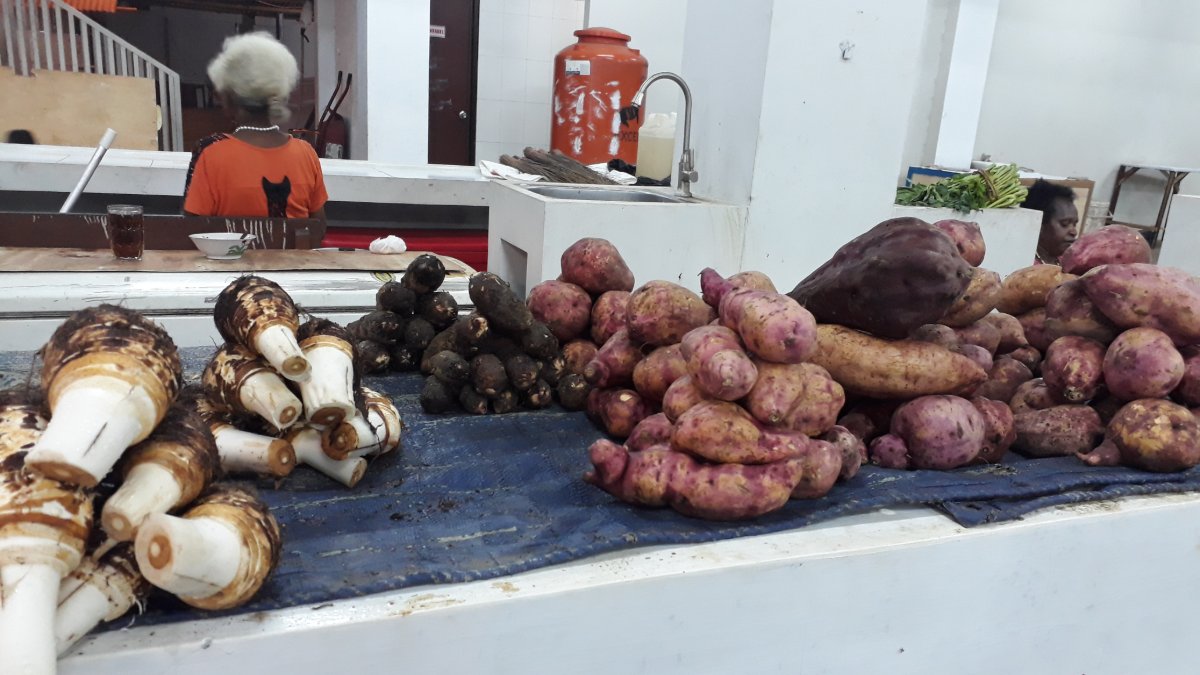
Pasar Mama-Mama Papua is an important trading space for Indigenous Papuan women selling agricultural produce, food, and local products. By October 2021, stalls in the market were offering QRIS. A Bank Indonesia social programme had also given aid, including sales tables, to 58 traders. On 22 October 2021, Darmawan Tohap Hutabarat, a team head at Bank Indonesia’s Papua office, said the market’s stalls could now take QRIS payments, fokuspapua.com reported.
He said QRIS meant sellers and buyers no longer had to hunt for change. At the time, many people saw handling cash as a COVID-19 risk. He added that payments going straight into traders’ bank accounts could help them save.
👉 ALSO READ: Digital Connectivity: Expanding Internet Access in Rural Papua
We found no current figures on how many traders at Pasar Mama-Mama Papua use QRIS today. Across the wider region, Bank Indonesia’s Papua office recorded about 39.5 million QRIS transactions in 2025, Antara reported on 23 January 2026. An earlier article on this site, Digital Payments in Papua: How QRIS Reaches Rural Market Stalls, looks at QRIS at rural market stalls.
However, introducing QRIS does not automatically make every transaction easier. A seller still needs a working phone, a stable connection, and a way to confirm that payment has arrived. These practical requirements matter when vendors handle small transactions throughout the day.
What Should Papua’s Market Sellers Know About QRIS?
Understanding Transaction Costs for Small Sellers
Transaction fees are an important consideration for traders with narrow profit margins. Bank Indonesia calls this fee the Merchant Discount Rate (MDR), which is charged to merchants rather than customers.
Bank Indonesia announced new rules on 17 August 2026, and they took effect on 1 October 2026. Under them, micro-enterprises pay 0% MDR on transactions up to Rp500,000 and 0.3% on transactions above that amount. Small, medium and large businesses pay 0% on transactions up to Rp100,000 and 0.7% above it. Some sectors, such as schools and petrol stations, have their own rates.
These details matter because not every small seller faces the same fee. The merchant’s registered business category and transaction value determine the applicable rate. The fee is paid by the merchant and, according to Bank Indonesia, must not be passed on to customers.
For mama-mama traders, understanding their merchant classification is therefore essential. Clear information from payment providers can help sellers calculate their actual earnings instead of assuming every QRIS payment reduces their income.
An illustration, using Bank Indonesia’s rates: a Rp50,000 sale paid by QRIS carries no fee for any regular merchant. If the rate applies to the whole amount, a single Rp550,000 sale would cost a micro-enterprise 0.3%, or Rp1,650. A small business would pay 0.7%, or Rp3,850.
When Internet Access and Daily Trading Conditions Matter
A QR code cannot complete a digital payment without a functioning connection. Weak mobile signals, slow applications, or delayed payment notifications can interrupt transactions, especially when sellers and customers need quick confirmation.
In May 2026, mediakontras.com reported concerns among small traders and mama-mama sellers at Pasar Darfuar in Biak. They included signal dropping out during payments and limited smartphone ownership. Sellers also found it hard to understand fees and how payments are settled. Biak is a different market, and we did not interview traders at Pasar Mama-Mama Papua in Jayapura for this article. Still, the same problems can arise wherever connections are weak.
For sellers, the practical question is simple: can they verify a payment quickly and confidently? Cash remains useful when connections fail or customers do not use digital banking. QRIS should therefore complement cash rather than force every transaction into one payment method.
Addressing Concerns: Digital Payments Are Not the Only Market Challenge
The condition of the market itself also affects sellers’ income. On 31 August 2026, traders at Pasar Mama-Mama Papua told the Jayapura city government that the market was quiet. They asked for repairs to the lighting, better management and a reopened back entrance, RRI reported. Deputy Mayor Rustan Saru said the city government was preparing to fix the market. It would hold a meeting on 2 September 2026 with traders and the agencies involved.
This context matters when evaluating digital payment programmes. RRI’s report does not mention payments. QRIS may simplify payment, but on its own it cannot attract customers, improve market facilities, or increase sales. Digital payments work best alongside practical improvements that support daily trading.
Will QRIS Work for Papua’s Mama-Mama Traders?
As Bank Indonesia said in 2021, QRIS can spare Papua’s market traders the search for change. It can also send payments straight to their bank accounts. However, its benefits depend on affordable fees, reliable connectivity and practical support for sellers new to digital apps.
The real measure of digital inclusion is not simply how many QR codes are distributed. It is whether mama-mama traders can use them confidently, receive payments without unnecessary delays, and retain more opportunities to grow their businesses. Technology should adapt to the realities of traditional markets, not create another burden for the women who sustain them.