
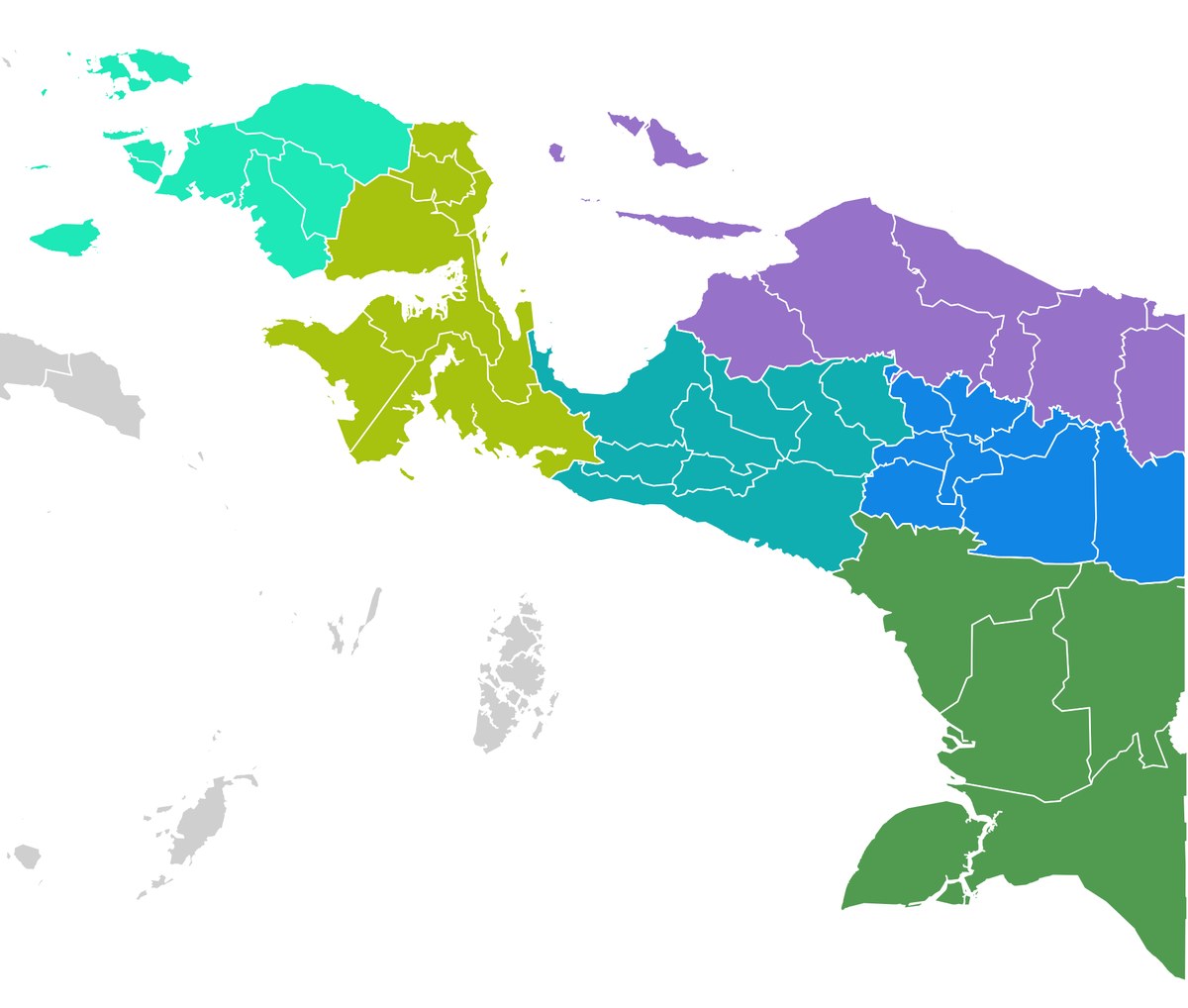
Indonesia’s administrative expansion in the Papuan region has reshaped its political map, creating four new provinces alongside Papua and West Papua. The six-province structure is intended to bring government services closer to remote communities and improve regional development. However, its success depends on effective public administration, accountable budget management, and meaningful participation by Indigenous Papuans (Orang Asli Papua).
Redrawing the Political Map of Eastern Indonesia
Papua’s expansion into six provinces was formalised through four laws enacted in 2022. Laws No. 14, 15, and 16 established South Papua, Central Papua, and Highland Papua in July 2022. Law No. 29 established Southwest Papua in December 2022. Together with Papua and West Papua, these changes created the current six-province administrative structure.
The government presented the expansion as a way to shorten administrative distances, improve public services, and make development programmes more responsive to local conditions. The Cabinet Secretariat’s explanation of the three initial new provinces outlines these objectives, including more focused development and improved access to government services.
👉 ALSO READ: Why Did Indonesia Create New Provinces in Papua?
Key Pillars of the Six-Province Structure
Expanding Representation in National Politics
The new provincial boundaries also changed the organisation of political representation. One clear example is the Regional Representative Council (Dewan Perwakilan Daerah, DPD RI). Under Article 252 of Law No. 17 of 2014, each province elects four DPD members.
With six provinces, Papua’s regional delegation therefore has 24 DPD seats, compared with eight when the region consisted of two provinces. The four new provinces added 16 seats to the region’s DPD representation. This change was also explained by the General Elections Commission (KPU) in reporting by detikNews on the additional DPD seats for the 2024 election.
This expansion gives each province its own representation in the DPD, allowing regional interests to be brought into national discussions through elected representatives. These representatives can raise issues related to infrastructure, public services, natural resources and regional development. However, greater representation does not automatically guarantee that local concerns will receive adequate attention. Its effectiveness also depends on how actively representatives communicate with communities and follow up on their priorities.
Fiscal Decentralisation and Local Governance
Each new province requires its own administration, regional parliament, public institutions, and civil service. The central government also provided operational funding for the newly established provinces through the 2023 state budget. Finance Minister Sri Mulyani confirmed this arrangement in an ANTARA report on funding for Papua’s new provinces.
Separate provincial administrations can bring government functions closer to local communities. They also create opportunities to develop regional budgets and public programmes based on different local needs. For example, infrastructure priorities in coastal areas may differ from those in mountainous districts. However, these benefits depend on the capacity of provincial institutions to plan programmes, manage public funds and coordinate with district and city governments.
However, distributing funds is only one part of the challenge. A July–December 2024 report by the SKALA programme recorded Rp1.44 trillion in unutilised 2023 funds across Papua’s six provinces and 44 districts and cities. This highlights the importance of strengthening planning, coordination, and budget implementation so that allocations translate into services and infrastructure.
Addressing Concerns: Administrative Capacity and Indigenous Participation
The expansion also raises questions about whether new institutions can deliver improvements quickly and fairly. A 2026 study published in Frontiers in Political Science found differing views on Papua’s regional expansion. Government actors generally emphasised its potential to improve welfare and public services, while civil society participants raised concerns about the possible marginalisation of Indigenous communities. The study also identified gaps in coordination and policy integration among stakeholders.
These concerns underline why administrative expansion alone cannot guarantee better outcomes. Transparent budget oversight, capable local institutions, and meaningful participation by Indigenous Papuans are essential. Provincial governments must also work with customary communities and local organisations when planning development that affects land, livelihoods, and cultural interests.
Conclusion: Shaping Indonesia’s Democratic Future
The creation of six provinces has expanded Papua’s administrative structure and increased its representation in the DPD RI. It has also created new responsibilities for regional governments to strengthen institutions, manage public budgets and improve access to public services.
Ultimately, the value of this administrative change will depend on its impact on local communities. Better representation and closer government administration must be matched by accountable leadership, effective coordination and fair distribution of development opportunities. Most importantly, Indigenous Papuans need meaningful opportunities to participate in decisions that affect their communities and future.