Highland and coastal Papua live very different lives, and official data now shows how far apart they are. Coastal towns have ports, markets and hospitals. Highland districts rely on small planes, gardens and a few roads. This article uses the National Food Agency’s 2026 index, along with transport reports, to compare the two and to show what links them.
How different are highland and coastal Papua?
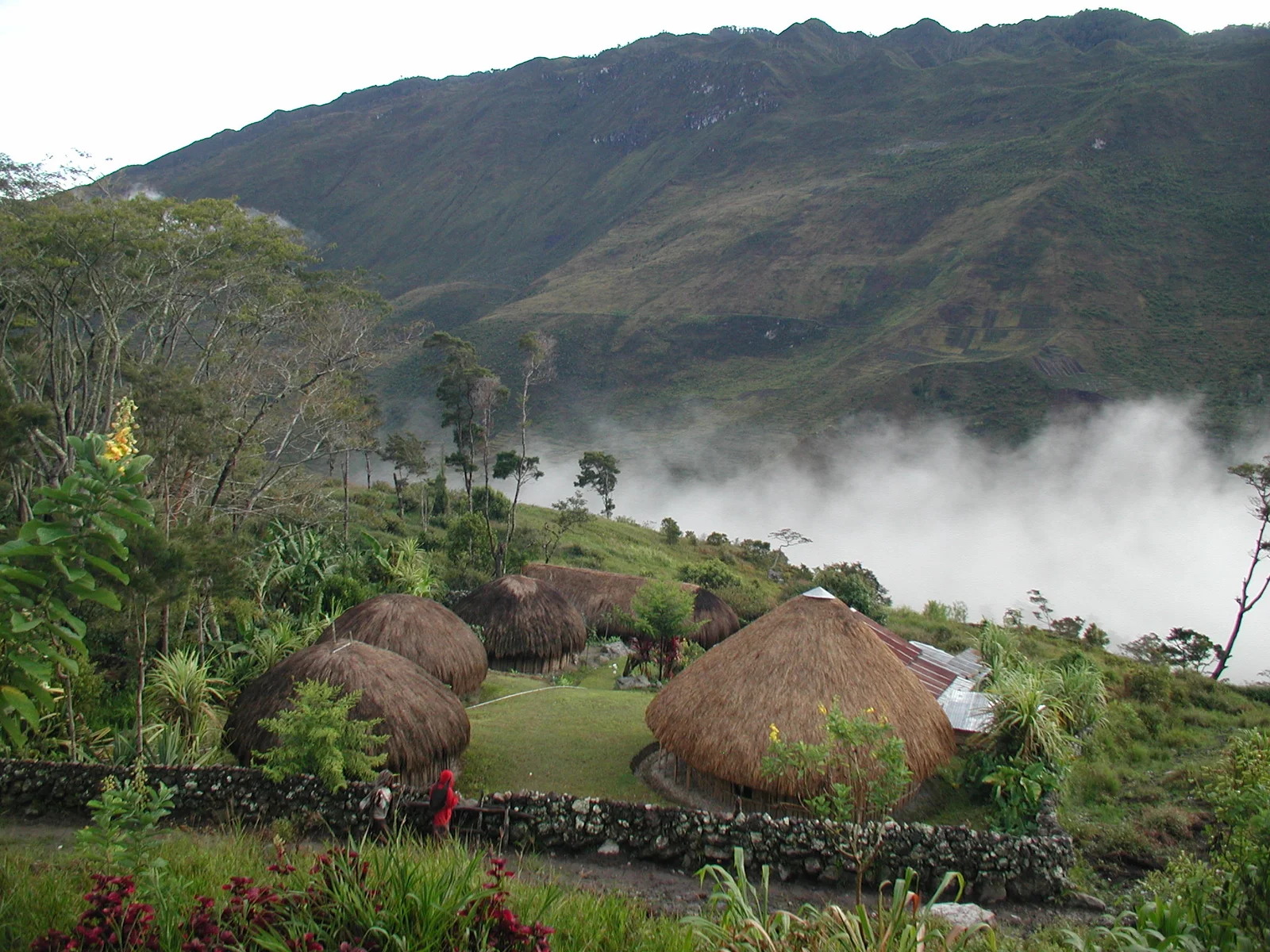
The coast holds the main cities, such as Jayapura, Sorong, Merauke and Timika in Mimika. Ships and flights connect them to the rest of Indonesia. The central highlands, around towns such as Wamena, sit behind steep mountains. Many highland villages are reachable only on foot or by small aircraft.
The National Food Agency’s Food Security Index gives a measurable view of this gap. It scores each regency and city on three parts: whether food is available locally, whether people can afford and reach it, and whether they can use it well, which depends on clean water, health and nutrition.
| Area | Setting | Food availability | Affordability and access | Use (water, health, nutrition) | Overall index |
|---|---|---|---|---|---|
| Jayapura (city) | Coast | 29.21 | 83.60 | 72.71 | 61.73 |
| Sorong (city) | Coast | 33.23 | 81.81 | 70.12 | 61.62 |
| Merauke | South coast, lowland | 68.46 | 66.22 | 73.29 | 69.34 |
| Mimika | South coast | 59.53 | 81.51 | 63.59 | 68.14 |
| Jayawijaya (Wamena) | Highlands | 20.49 | 70.29 | 39.02 | 43.13 |
| Puncak | Highlands | 8.52 | 38.74 | 14.29 | 20.43 |
What do the numbers show?
Coastal cities score low on local food production, because they grow little food themselves. However, they score high on affordability and access, because markets are well supplied by ship. They also score high on water and health. As a result, their overall scores sit around 62.
Merauke is a special case. It lies on the southern lowlands, where large rice fields have been opened, so it scores far higher on local availability (68.46) than the coastal cities. It has the highest overall score in the table.
Highland regencies are weak on almost every part. Across the eight regencies of Highland Papua, the average availability score was 18.7, affordability 62.1 and use 26.8, according to Papua Movement’s calculation from the agency’s data. Puncak scored only 14.29 on the use measure. In short, the deepest gap is not only food, but also water, sanitation and health care.
👉 ALSO READ: Papua Youth Movement: Empowering Youth Through Creative Spaces
How do roads and flights link the two?
Most goods reach the highlands by air. Fuel for Jayawijaya normally arrives on about four cargo flights a day, and haze in October 2026 cut that to one or two, Antara reported. Roads are slowly changing this. The government aims to finish the Jayapura–Wamena road in the second half of 2026, Antara reported in 2025, although land disputes and security still slow the work.
Where roads already exist, they have cut journeys sharply. In 2017, the then regent of Jayawijaya told Kompas that the 90-kilometre road from Wamena to Mbua had cut a walk of up to a month to a single day. For more examples, see Trans-Papua Travel Time. For why highland prices stay higher, see Papua Price Disparity.
What would narrow the gap?
- Water and health first. The biggest highland gap is in clean water, sanitation and health services, not only in food.
- Reliable land links. Finishing and maintaining roads between the coast and the highlands.
- Support for local crops. Sweet potato, sago and vegetables already grow in the highlands and need markets and storage.
- Yearly tracking. Following each regency’s index to see whether the gap closes.
For more on food security across Papua, see Papua Food Security. For health access, see Papua Rural Healthcare.