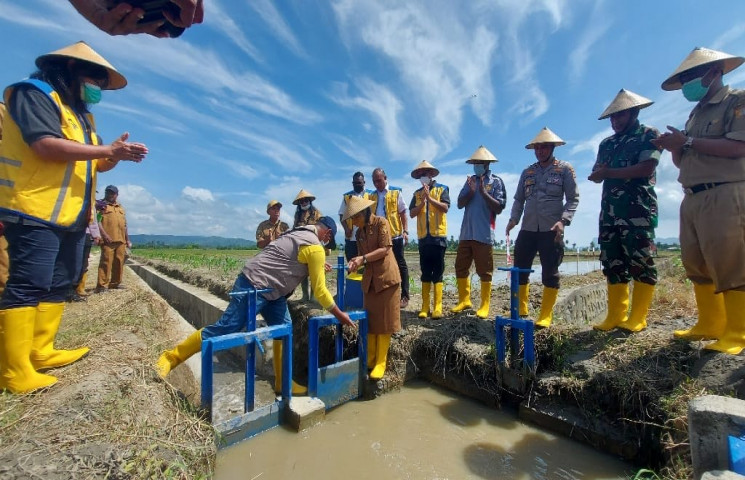
Indonesia is opening tens of thousands of hectares of new rice fields in Papua, and the army is doing much of the building. According to the Ministry of Agriculture, the government had developed more than 83,000 hectares of new rice fields across Papua by mid-2026. Most of them are in Merauke, South Papua. This article sets out the official figures, what the army (TNI) does in the programme, and why some indigenous residents object.
ALSO READ: Papua Food Security: Why the Highlands Rank Lowest in Indonesia
How much new farmland has the government opened in Papua?
In July 2026 the Ministry of Agriculture reported that the government had developed 83,030 hectares of new rice fields (cetak sawah) and improved 54,399 hectares of existing farmland (optimalisasi lahan) across Papua. South Papua, where Merauke is located, accounts for the largest share.
| Province | New rice fields (ha) |
|---|---|
| South Papua | 48,934 |
| Papua | 24,248 |
| Southwest Papua | 4,675 |
| West Papua | 3,373 |
| Highland Papua | 2,000 |
| Total | 83,030 |
Figures differ slightly between programmes. In October 2026, Antara reported that the People’s Rice Field programme (Cetak Sawah Rakyat) in South Papua covered 45,993 hectares: 17,693 hectares in 2025 and 28,300 hectares in 2026.
What does the army do in the programme?
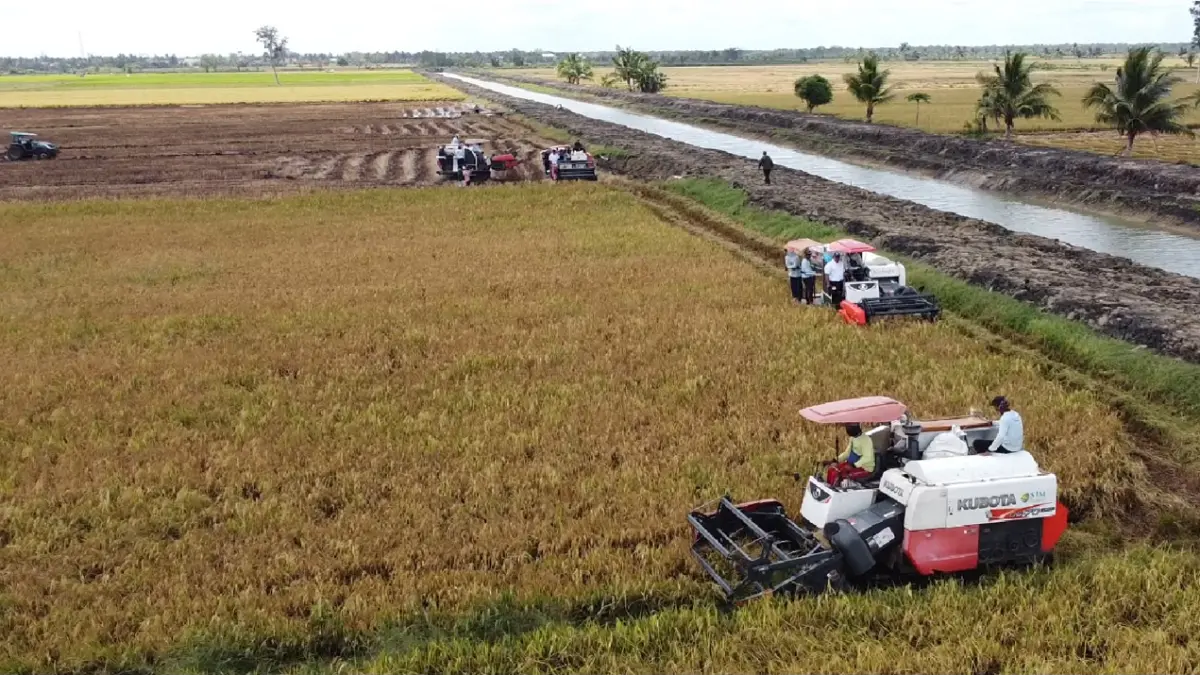
The army mainly does the heavy construction. It clears land, digs drainage and irrigation channels, and builds farm roads. In April 2026 the regional army command for southern Papua, Kodam XXIV/Mandala Trikora, signed a construction agreement for the People’s Rice Field programme in Merauke. According to Disway Papua Selatan, the target was 50,000 hectares, and officials said the army’s equipment and discipline could speed up work in difficult terrain.
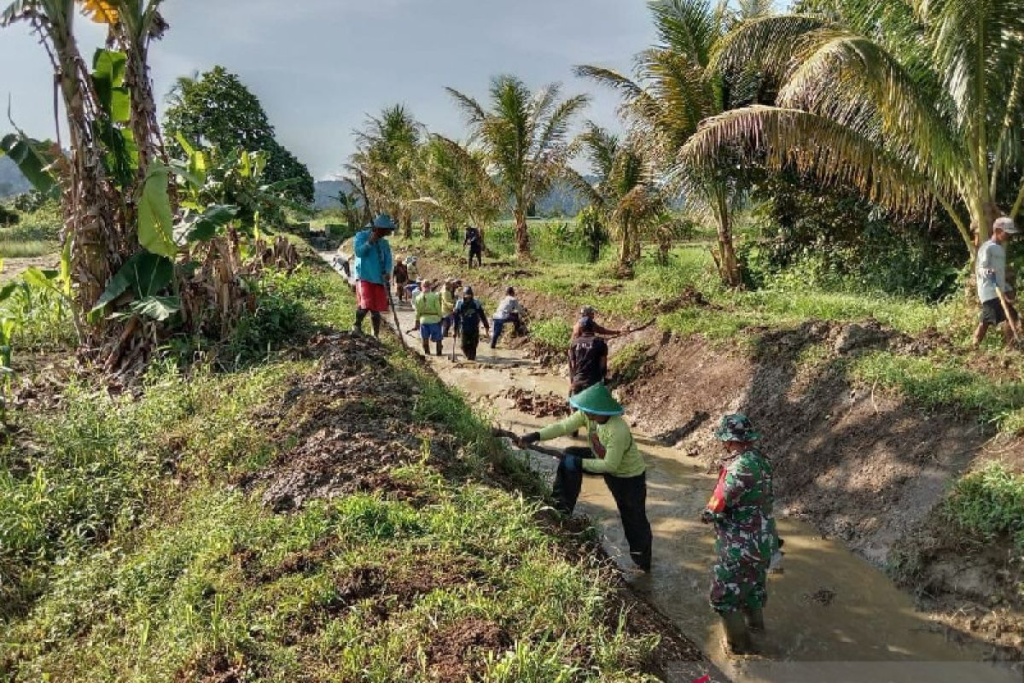
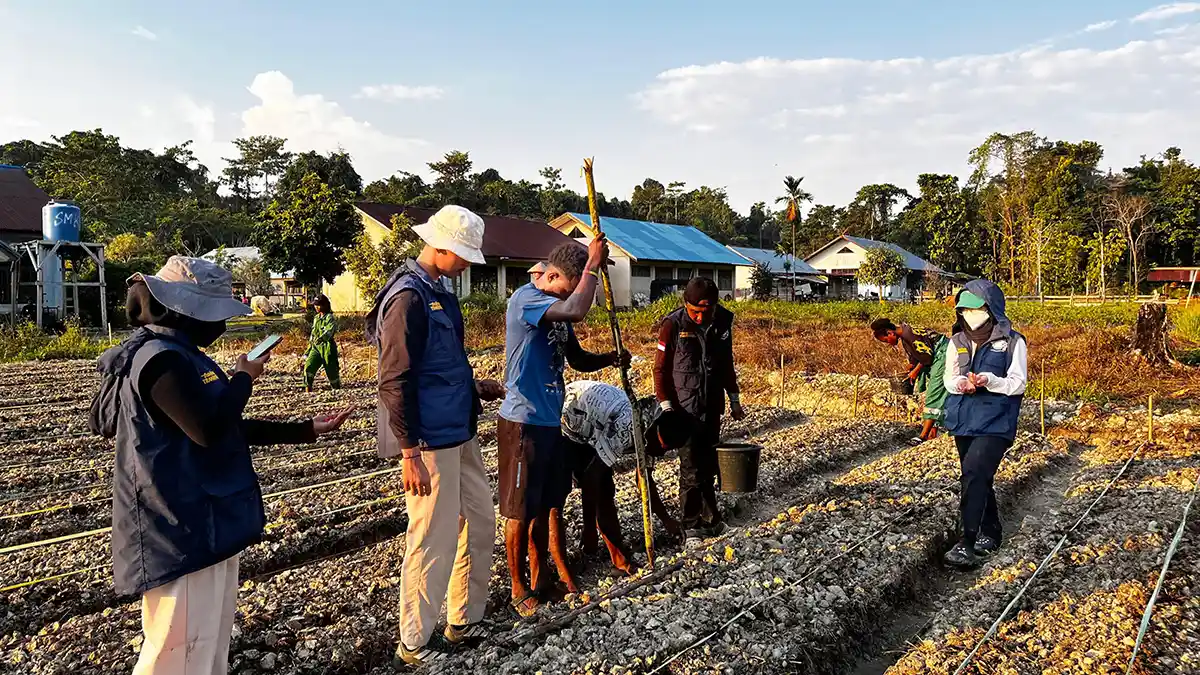
Civilian agencies remain in charge of farming itself. The Ministry of Agriculture supplies seed, fertiliser and machinery, and local agriculture offices work with farmer groups. When Deputy Minister Muhammad Saleh Mustafa visited Merauke in October 2026, farmers asked him for farm roads, irrigation, machinery, fertiliser and seed.
Who benefits, according to the government?
Agriculture Minister Andi Amran Sulaiman has said that the new fields belong to the people, especially indigenous Papuans, and that the programme does not take away community rights. He also said that farmers in Merauke now operate modern farm machinery. The government presents Merauke as a future national rice granary.
South Papua’s governor, Apolo Safanpo, has described Merauke as the backbone of food development in the region. He noted that more than half of Papua’s new rice fields, and almost all of its improved farmland, are in Merauke regency. He said the provincial government fully supports the national strategic projects in the food sector because they bring large economic benefits to local people.
Why do some indigenous residents object?
Not everyone agrees. In September 2025, Liborius Kodai Moiwend, a clan head from Wogekel village in Ilwayab district, Merauke, testified at the Constitutional Court. He said the project began without dialogue with village elders, and that workers cleared forests and swamps his community relied on while soldiers were present. Legal aid and environmental groups, including YLBHI and WALHI, brought the case as part of a review of the Job Creation Law.
These accounts point to the main tension in the programme: how fast the government can open land, and how fully it consults customary (adat) landowners first.
What should readers watch next?
- Harvests, not hectares. Opened land matters less than how much rice it actually produces each season.
- Consent and compensation. Whether customary landowners agree to the use of their land, and on what terms.
- Who farms the land. Whether local Papuan farmers, rather than outside workers, end up cultivating the new fields.
- Legal challenges. Court decisions on the Job Creation Law may shape how the government carries out strategic projects such as this one.