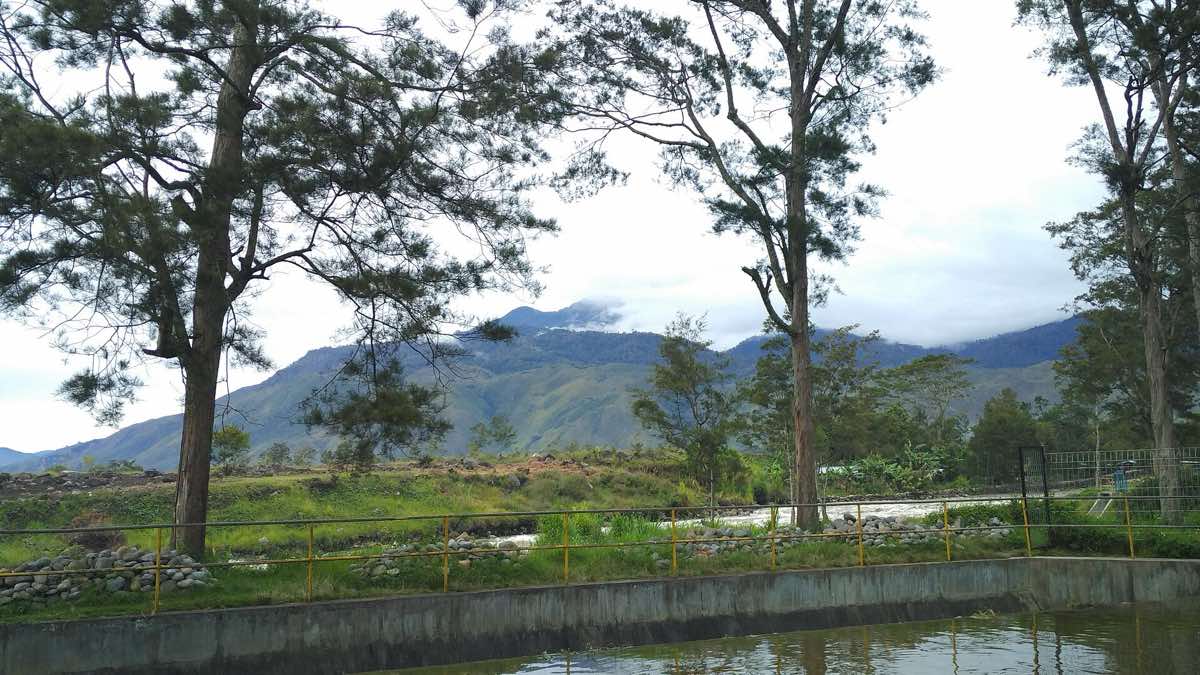
Rivers can provide more than water for remote villages. In several parts of Papua, small hydropower plants turn flowing streams into electricity for homes and public facilities. Some communities have helped build and maintain these systems, while others are still developing local projects to improve access to reliable power.
Micro-hydro plants, known in Indonesia as PLTMH, use flowing river water to turn turbines and generate electricity for nearby homes. A December 2024 study identified 30 rivers in a study area in West Papua province with combined potential of about 4,770 kilowatts. That is potential, not current output. Community-run plants already operate in Sorong Regency.
How Does Micro-Hydro Power Work in Papua?
Micro-hydro power plants, known locally as Pembangkit Listrik Tenaga Mikrohidro (PLTMH), use flowing water to turn turbines and generate electricity. Unlike large hydropower dams, these systems can serve smaller communities through local rivers and streams.
This technology is relevant to Papua, where difficult terrain and distance from existing electricity networks can make power distribution challenging. A December 2024 study published in the International Journal of Renewable Energy Research identified 30 rivers in a study area in West Papua province with potential for micro-hydro development. The researchers estimated a combined potential capacity of around 4,769.97 kilowatts, based on historical data from 2012 to 2021. This is an estimate of potential, not the amount of electricity currently generated.
👉 ALSO READ: Solar Power in the Papua Highlands: What It Takes’s Highlands
How Do Villages in Papua Run Their Own Micro-Hydro Plants?
Local Rivers Become Community Energy Sources
Several villages in Papua Barat Daya have demonstrated how local water resources can support household electricity. In Malaumkarta and Suatolo villages, Sorong Regency, residents independently developed a micro-hydro plant using water from the upper Kalawagan River. The system began providing electricity in 2018.
According to a 2022 EcoNusa feature, the initiative grew from residents’ efforts to find an alternative to limited electricity access. The village head of Malaumkarta said the power supply helped children study at night and allowed residents to use phones and laptops.
Another example comes from Suwatuk Village, Makbon District, Sorong. A 2024 report by Kanal Desa stated, citing village government data, that its micro-hydro plant supplied electricity for 20 households, with each receiving 300 watts. The system provided electricity for up to 24 hours a day.
Community Participation Keeps the System Running
Building a power plant is only the first step. Residents also need to maintain water channels, turbines and other equipment. Suwatuk offers an example of this responsibility. Local operator Laurens Kalami checks the water intake when electricity weakens. Heavy rain can carry leaves, stones and sand into the reservoir, disrupting the water flow.
A newer initiative is taking shape in Wosimo Village, Naikere District, Teluk Wondama. In June 2026, YALI Papua reported that Mairasi residents were working together to build a water reservoir for a self-funded micro-hydro project, with support from YALI Papua and the local government. The project was still under construction at the time of the report.
Who Maintains Micro-Hydro Plants in Papua?
Community participation does not automatically guarantee reliable electricity. Micro-hydro systems depend on steady water flow, suitable equipment and regular maintenance. Heavy rain, sediment and damaged pipes can interrupt power supplies. Communities also need access to technical skills and funds for repairs.
Research on the Anggi and Kali Ombak micro-hydro plants in West Papua highlights another challenge. A 2023 study published in the Social, Ecology, Economy for Sustainable Development Goals Journal found that active community involvement in planning and maintenance had not yet been realised at either site. This suggests that local ownership requires more than community participation during construction. Long-term management arrangements also matter.
Can Community Micro-Hydro Power Papua’s Remote Villages?
Micro-hydro plants show how local rivers can help address electricity needs in remote villages. Experiences in Malaumkarta, Suwatuk and Wosimo demonstrate different stages of community involvement, from operating existing systems to building new ones.
However, reliable electricity depends on more than water and turbines. Technical training, maintenance funds and clear management responsibilities are essential. With these elements in place, community-based micro-hydro can become a practical source of electricity for villages that remain difficult to reach through conventional power networks.