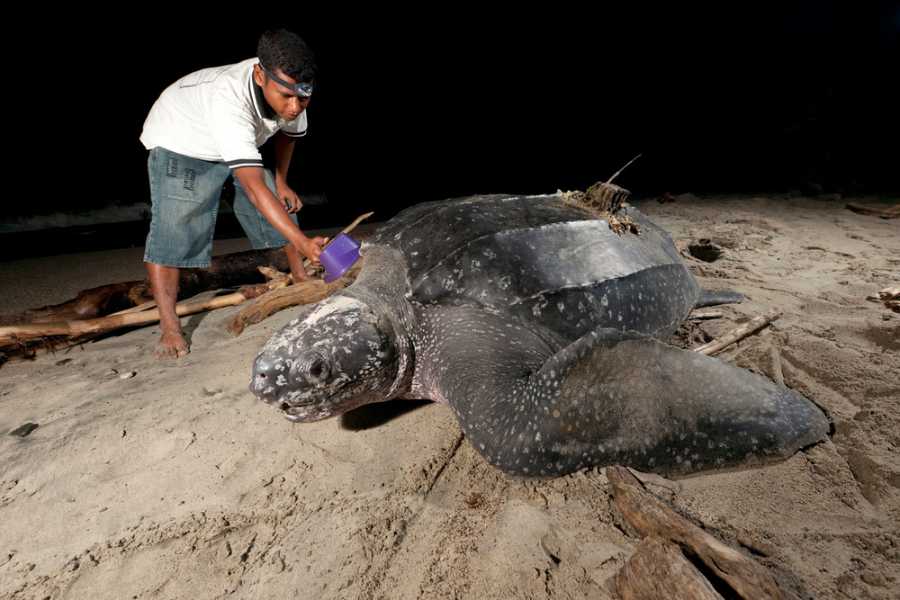
Every nesting season, Pacific leatherback turtles return to the beaches of Tambrauw Regency, Southwest Papua, which a 2013 study said might be the last remaining stronghold for leatherbacks in the Pacific. Papua’s coastal ecosystems and rich marine biodiversity create opportunities to strengthen conservation cooperation between local coastal communities, marine researchers, and public institutions. Lasting progress depends on mutual respect, active local participation, and practical initiatives that respond to shared ecological priorities.
Protecting Ancient Marine Heritage in Southwest Papua
The coastal beaches of Jamursba Medi and Wermon in Tambrauw Regency represent a primary global nesting sanctuary for the Pacific leatherback turtle (Dermochelys coriacea). A long-term study by Ricardo Tapilatu and colleagues, published in Ecosphere in 2013, found that the estimated annual number of leatherback nests at Jamursba Medi fell 78.3% over 27 years, from 14,522 in 1984 to 1,596 in 2011. Without continuous monitoring, vulnerable nests face severe risks from high-tide erosion, coastal development, and egg predators.
By combining traditional stewardship with scientific monitoring, conservation teams in Southwest Papua can better track turtle nesting activity and protect vulnerable nests. WWF Indonesia reports that female leatherback turtles typically lay around 80 to 100 eggs per nest. During the nesting season, monitoring officers walk the beaches at night, while a community supervisory group, POKMASWAS (Kelompok Masyarakat Pengawas), helps protect nests from predators. Furthermore, local communities play a frontline role in preventing illegal poaching and managing ecotourism responsibly.
Key Pillars of Leatherback Turtle Conservation
Community Guardianship and Habitat Protection
Under community-led conservation programs, local indigenous wardens conduct regular patrols along key nesting shores to safeguard fragile marine ecosystems. Protecting these critical nesting grounds gives more hatchlings a chance to reach the ocean, which matters for a population that researchers in 2013 called the last sizeable nesting population in the entire Pacific.
- Regular Beach Patrols: On Jeen Jessa beach alone, monitoring officers walk some 18 kilometers through the night during the nesting season, according to WWF Indonesia in 2015; nearby Jeen Syuab adds another 6 kilometers of nesting shore.
- Safe Hatchling Release: Conservation teams assist newborn turtles in reaching the ocean safely during peak nesting seasons.
Marine Habitat and Blue Economy Integration
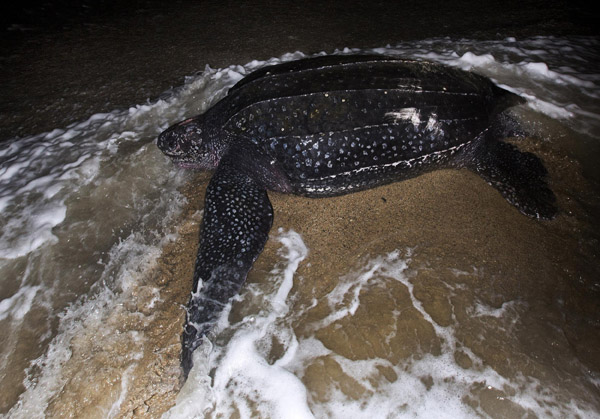
Leatherback sea turtles travel vast oceanic distances: western Pacific leatherbacks have been tracked from Indonesian New Guinea to feeding grounds off the U.S. West Coast, a journey of some 11,000 kilometers, Mongabay reports. Along the way they consume large quantities of jellyfish, helping to maintain marine food web balance. In May 2024, the Ministry of Marine Affairs and Fisheries (KKP) announced that 5.5 million hectares of turtle habitat nationwide had been designated as conservation areas, with 44 of the 117 marine conservation areas set by the minister dedicated to turtle conservation.
Through sustainable blue economy frameworks, regional authorities and local stakeholders work to maintain clean, productive marine habitats. Protecting these coastal ecosystems preserves critical turtle nesting routes while safeguarding sustainable fish stocks for local fishing communities.
👉 ALSO READ: Young Generations and Indigenous Communities Guard Papuan Forests
Addressing Concerns: Balancing Conservation with Local Needs
Establishing strict wildlife conservation zones sometimes raises questions regarding local access and economic activities.
However, effective community-based conservation models demonstrate that protecting endangered species can generate sustainable livelihoods through ecotourism, research grants, and conservation employment. When local residents receive fair compensation and lead beach patrol teams, conservation becomes a source of economic stability rather than a restriction.
Conclusion: Guardians of the Ocean Heritage
In conclusion, the annual return of leatherback turtles to Tambrauw highlights the ecological significance of Southwest Papua’s coastal environments. Safeguarding these ocean giants requires continuous collaboration between indigenous communities, scientific researchers, and public institutions.
Papua Movement reviewed how community patrol efforts and marine conservation initiatives work together to protect these endangered sea turtles. Ultimately, protecting leatherback nesting grounds preserves vital global marine biodiversity and secures a sustainable environment for future generations.