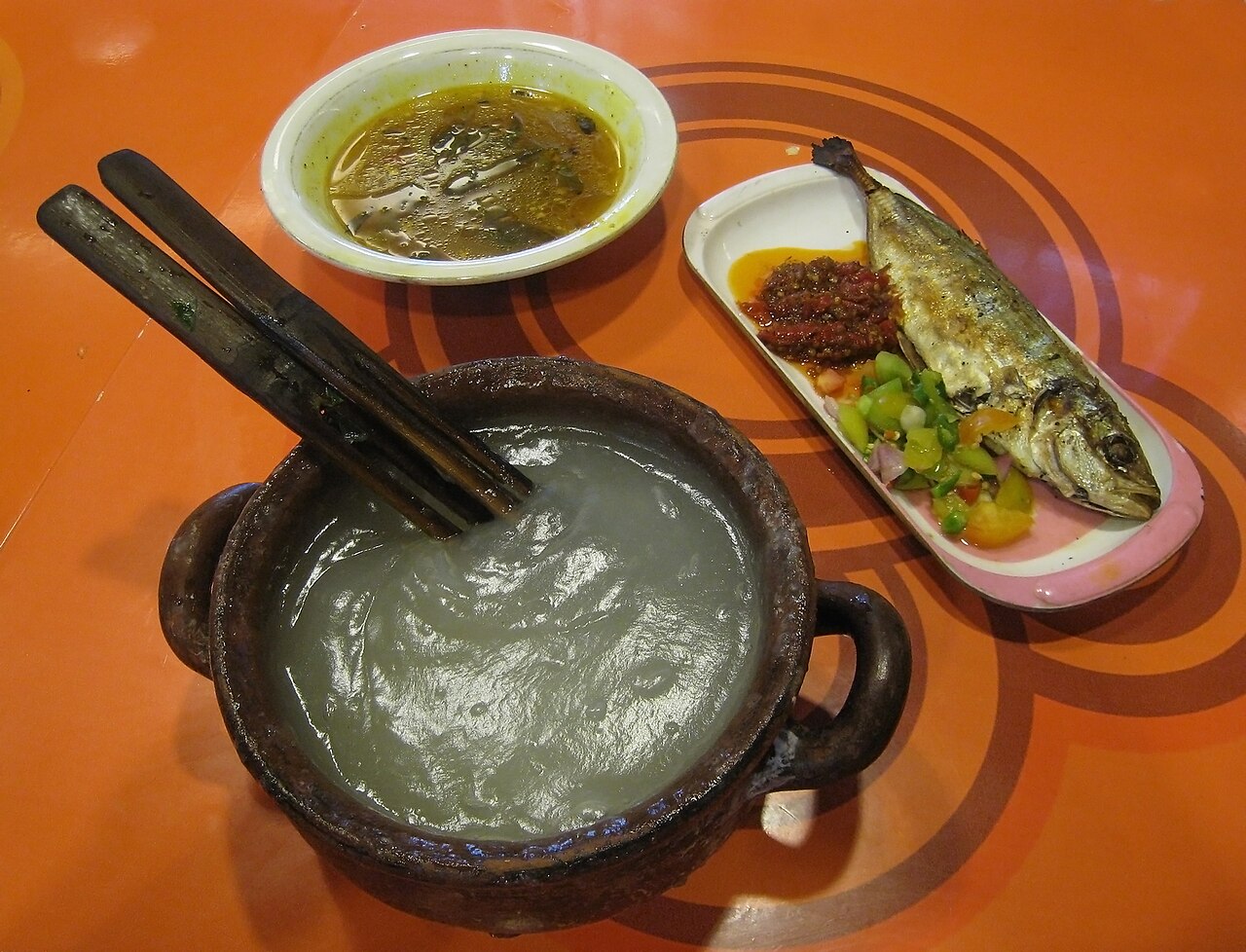
Papuan food is built on a few traditional staples. On the coast and in the lowlands, people rely on sago, which they cook into a sticky porridge called papeda. In the highlands, by contrast, sweet potato is the main food. Fish, forest vegetables and pork from the communal bakar batu feast complete the picture.
What are the main staples of Papuan food?
Above all, Papua’s staples depend on where people live. In general, the coast and the lowlands eat sago, while the highlands grow sweet potato.
| Staple | Where it is eaten | How it is prepared |
|---|---|---|
| Sago | Coast and lowlands | Starch from the sago palm, cooked into papeda |
| Sweet potato | Highlands, such as the Baliem Valley | Grown in gardens and cooked in the bakar batu stone feast |
| Fish | Coast and rivers | Often cooked in a spiced yellow broth and eaten with papeda |
Sources: Antara; Ministry of Tourism; Indonesia.travel.
What is sago?
Sago is a starch that people extract from the sago palm. In Papua, it has been a main source of food for centuries, long before rice arrived (Antara). In fact, Papua has Indonesia’s largest sago-growing area, according to the UN Food and Agriculture Organization (FAO). For generations, people in sago regions have harvested wild sago palms from the forest (FAO).
What is papeda?
Simply put, papeda is a sago porridge with a chewy, sticky texture. To make it, cooks pour sago starch into boiling water. Then they stir it in one direction until it turns from white to a clear grey and becomes almost like glue (Antara).
On its own, however, papeda tastes neutral. For this reason, people usually eat it with ikan kuah kuning, fish such as tuna or snapper cooked in a yellow broth of turmeric, lemongrass and other spices. To eat it, locals twirl the papeda around a pair of chopsticks to break off a piece (Indonesia.travel). Besides Papua, people also eat papeda in Maluku and parts of Sulawesi (Antara).
👉 ALSO READ: Visiting West Papua: What It Is Known For and How to Travel There
Why is sweet potato central to highland Papuan food?
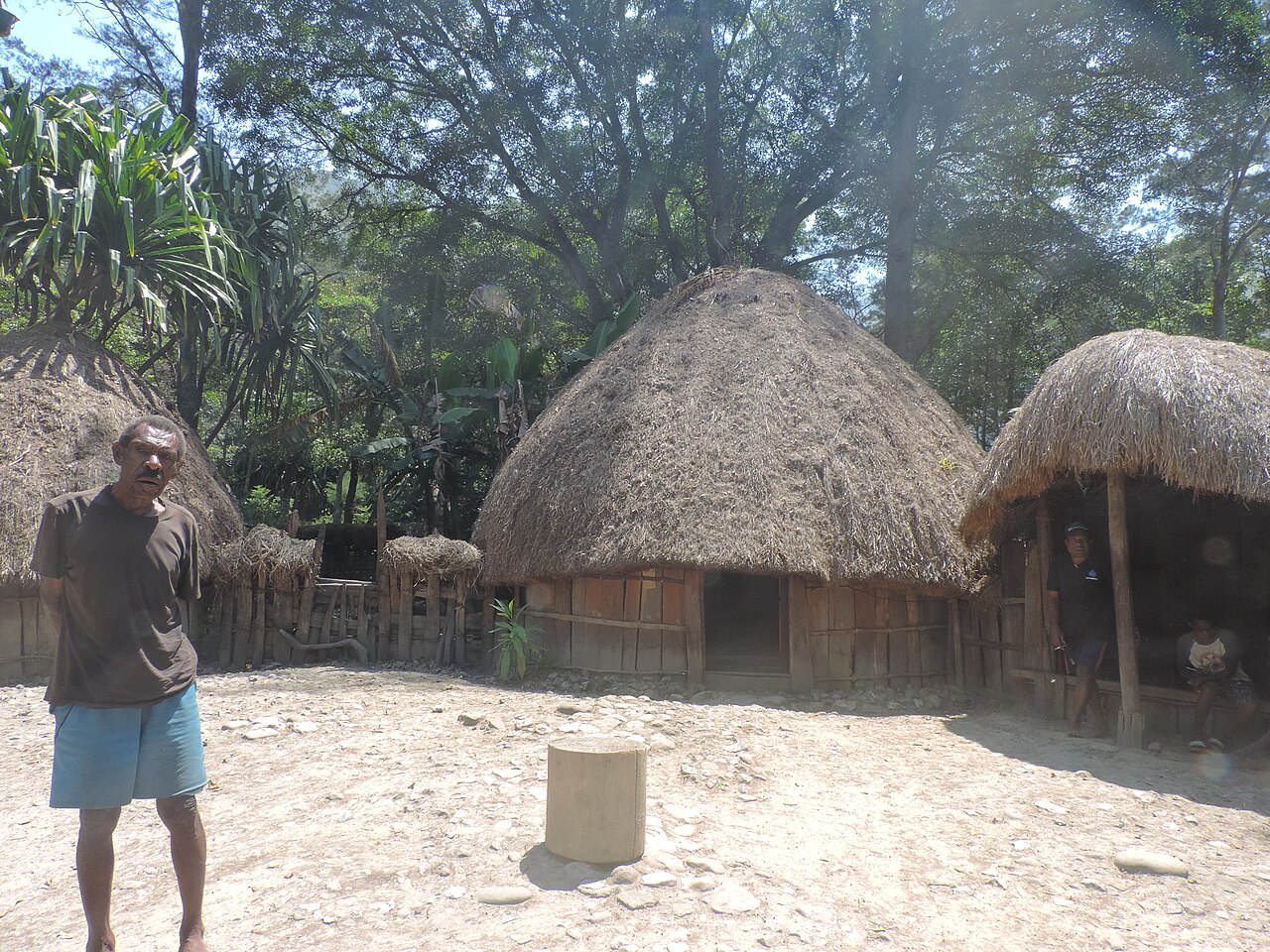
Similarly, in the highlands, sweet potato plays the role that sago plays on the coast. For example, Dani men in the Baliem Valley are farmers who grow sweet potatoes as their staple food (Ministry of Tourism).
What is bakar batu?
Bakar batu, which means “burning stones”, is a communal cooking feast of the Papuan highlands. First, people heat river stones in a fire until they glow red. Next, men dig a pit about two metres wide and line it with banana leaves and grass. After that, they layer meat, sweet potatoes and forest vegetables between the hot stones. Finally, they cover the pit with leaves and soil and leave the food to cook for several hours (Indonesia.travel).
Notably, the feast has different names in different communities. For instance, the Dani and Biak call it barapen, while the Lani call it lago lakwi. Communities still hold it to give thanks, welcome guests, celebrate weddings and make peace between groups (Indonesia.travel).
How is Papuan food changing?
Meanwhile, local businesses and farmers are working to process sago, cocoa and root crops into products that can sell beyond Papua. Papua Movement covers this in Processing Native Harvests Builds Sustainable Papuan Food Industry and National Resilience Begins with Local Food Security.
Sources
- FAO Indonesia: FAO Builds World’s First Integrated Sago Palm Processing Facility in the World (28 December 2017)
- Antara: Mengenal papeda dan asal usulnya (11 August 2024, in Indonesian)
- Indonesia.travel (Ministry of Tourism): Papeda Ikan Kuah Kuning
- Indonesia.travel (Ministry of Tourism): Tradisi Bakar Batu di Papua (in Indonesian)
- Ministry of Tourism of the Republic of Indonesia: The Charm of Baliem Valley, A Paradise for Natural and Cultural Tourism
Featured image: Papeda (sago porridge) with ikan kuah kuning (yellow fish soup) and grilled fish (2011). Photo: Gunawan Kartapranata / Wikimedia Commons, CC BY-SA 3.0.