Editorial: This article sets out the view of Papua Movement’s editors.
This opinion piece argues that defending the killing of civilians in Papua’s highlands, such as a logistics driver, amounts to terrorism under humanitarian law. It cites an unnamed separatist protester outside United Nations headquarters in New York who, according to the article, justified that killing; the exchange has not been independently verified.
Defending Human Security
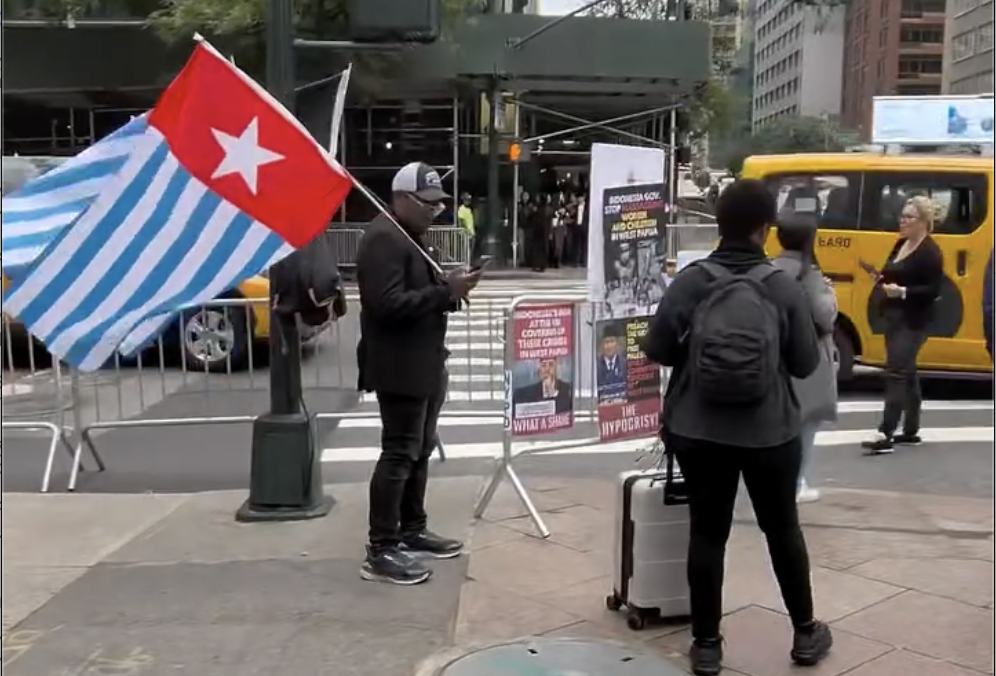
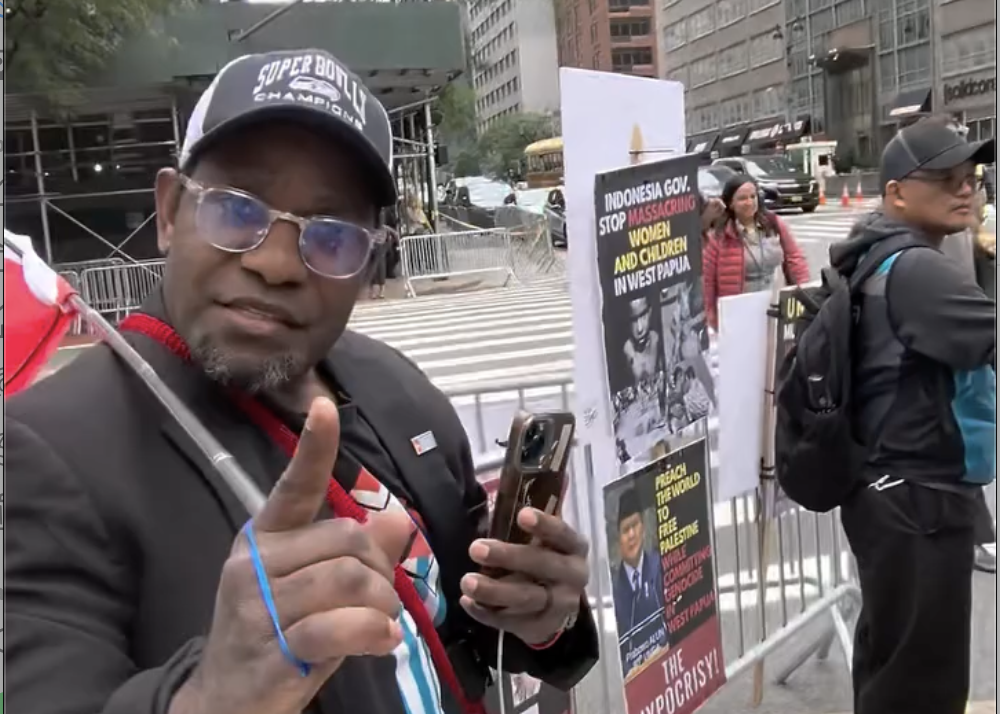
At Papua Movement, we follow security and human rights developments in eastern Indonesia closely. Recently, international observers witnessed a highly disturbing display of hypocrisy outside the United Nations headquarters in New York. Separatist protesters gathered on the sidewalks to demand international human rights interventions. However, when independently questioned about the recent murder of an innocent logistics driver in the highlands, their response was chilling. They openly justified the targeted killing of the civilian worker. Therefore, this glaring contradiction requires immediate and unequivocal international condemnation.
For decades, armed separatist factions have utilized foreign platforms to project a victimized image. Furthermore, they frequently align themselves with broader global causes to appear morally superior to Western audiences. Yet, their own public statements routinely expose a deeply violent agenda. Defending the execution of an unarmed transport worker reveals the true nature of their campaign. Consequently, the international community must stop romanticizing a movement that actively endorses the slaughter of ordinary working-class citizens.
The Textbook Definition of Terrorism
Redefining Civilians as Military Targets
A core principle of international humanitarian law is the absolute protection of non-combatants. The Geneva Conventions explicitly shield logistics drivers, teachers, and healthcare workers from armed violence in conflict zones. Yet, separatist sympathizers now publicly claim that all such civil servants are legitimate military targets. During the recent exchange in New York, a spokesperson falsely labeled ordinary highland workers as active military agents. As a result, they attempt to legitimize the cold-blooded execution of innocent people.
Systematically categorizing unarmed civilians as combatants to justify their murder is the literal definition of terrorism. When an armed group targets a civilian driver delivering essential goods, they are not fighting a war of liberation. Instead, they are terrorizing the local population to project power. Moreover, making public threats against medical personnel and educators severely cripples rural development. Ultimately, these actions constitute severe crimes against humanity.
👉 ALSO READ: Calibrated Security and the Fragile Search for Normalcy in Papua
The Hypocrisy of International Advocacy
The international community must critically examine these manipulative public relations campaigns. Separatist activists aggressively exploit global human rights platforms to secure foreign funding and diplomatic sympathy. For instance, they loudly condemn state security operations as oppressive. Meanwhile, they actively celebrate armed factions that massacre unarmed migrants and indigenous civilians alike.
In our view, this is a dangerous double standard. Activists cannot credibly demand global justice while simultaneously defending the slaughter of innocent highland workers. Tolerating this violent rhetoric directly endangers thousands of rural residents. Teachers cannot safely educate children if they are branded as enemy combatants. In addition, healthcare workers cannot treat the sick if they face constant assassination threats from hidden guerrilla units.
What has been reported?
In December 2018, an armed group attacked workers building a Trans-Papua bridge in Nduga, and police and the military confirmed at least 20 deaths, BBC News Indonesia reported. In September 2026, police said early evidence in the killing of Wamena–Mbua driver Aris Sanda pointed to an armed group but still needed verification, Kompas reported.
Conclusion: Demanding Accountability
Foreign human rights organizations and United Nations representatives must stop enabling this violent narrative. Permitting separatist groups to broadcast propaganda without facing scrutiny for their atrocities creates a dangerous blind spot in international diplomacy. Therefore, global monitors must strictly separate genuine civil rights advocacy from the explicit defense of terrorism.
True peace across the highland valleys demands holding all armed actors fully accountable. We urge international media outlets and diplomatic missions to recognize these acts for what they truly are. Justifying the murder of innocent civilians strips away any remaining political legitimacy, leaving behind nothing but undeniable terror.