The article argues that development projects in Papua should keep their money in local communities by hiring local workers, contracting village-owned enterprises (BUMKam) and native cooperatives, and buying local materials and produce. It says native firms need mentoring, equipment leasing and tender training to win larger contracts.
Retaining Capital and Profits Within Native Communities
Ensuring that regional development creates direct local economic benefits is transforming community livelihoods. In fact, large-scale infrastructure projects and agricultural expansions achieve true success only when capital remains within native districts. In the past, regional investments sometimes functioned as economic pass-throughs, relying on external contractors and suppliers with minimal financial return for village residents.
However, mandating local hiring preferences, partnering with village-owned enterprises (BUMKam), and sourcing native agricultural produce now keeps economic value flowing locally. By empowering indigenous entrepreneurs as key contractors, suppliers, and distributors, regional development drives immediate household prosperity. Consequently, inclusive investment transforms rural communities from passive bystanders into primary economic beneficiaries. As a result, native families build lasting financial independence and self-reliance.
Key Pillars of Locally Retained Prosperity
Prioritizing Native Supply Chains and Employment
Directing procurement budgets toward native businesses guarantees that infrastructure and agricultural funding directly elevates village living standards. For example, local road construction projects now contract native transport cooperatives and utilize regionally produced construction materials. Therefore, development capital circulates multiple times within the rural economy before leaving the district.
Prioritizing local economic benefits delivers several vital strategic advantages:
- Income generation: First, prioritizing native workers and contractors boosts household purchasing power and local consumer spending.
- Business growth: Second, guaranteed local procurement contracts allow native micro-enterprises to expand operations and invest in equipment.
- Skill acquisition: Third, working on major regional projects provides native workers with valuable technical certifications and engineering experience.
- Community wealth: Finally, profits retained by village cooperatives fund local health clinics, schools, and community infrastructure.
Establishing clear local-content mandates instills deep economic confidence across rural districts. Native entrepreneurs, as a result, build scalable enterprises that drive long-term regional expansion.
Strengthening Village Enterprises and Agricultural Partnerships
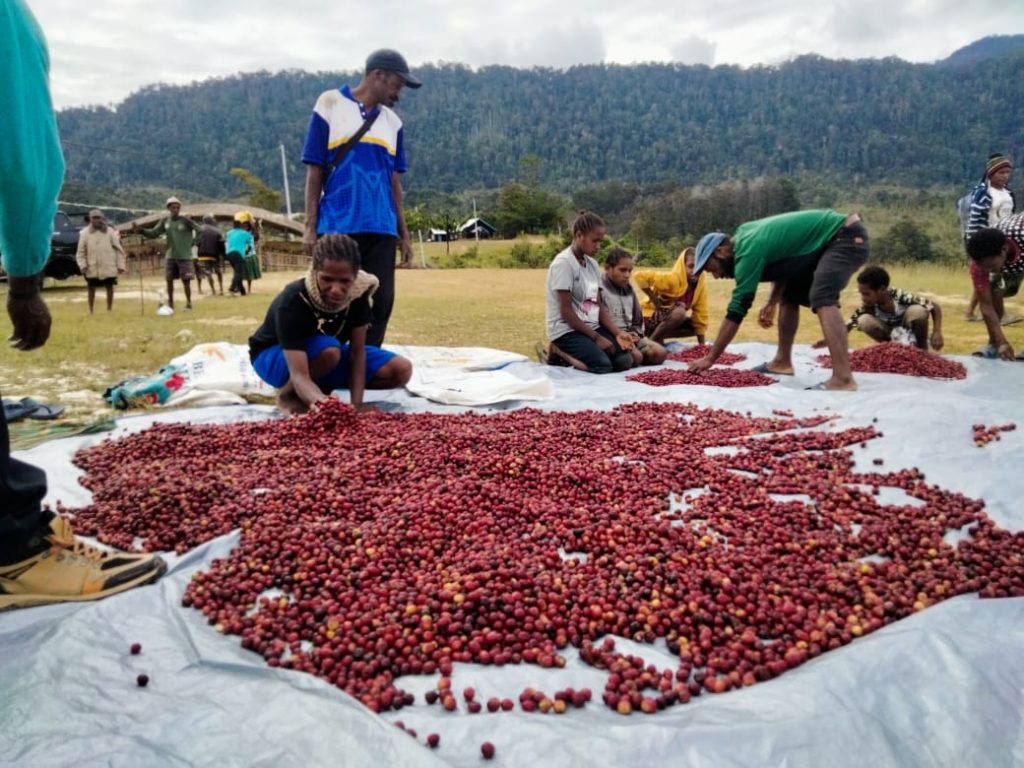
Integrating local farming cooperatives into commercial supply chains can help communities capture more value from their agricultural products. In Papua: The Heart of Indonesia–Pacific Food Resilience, Steve Mara highlights the importance of integrating Indigenous food systems into broader food security strategies. Developing local processing facilities for sago, coffee, and cocoa can put this approach into practice by creating higher-value products, expanding market access, and generating income opportunities for local producers.
Embedding local benefit requirements into regional economic policy supports fair, sustainable growth. Ultimately, equitable value distribution creates a flourishing, self-sufficient local economy.
👉 ALSO READ: Open Dialogue Drives Inclusive Papuan Development
Addressing Concerns: Technical Capacity and Market Access
Ensuring that native enterprises fulfill large-scale commercial contracts can sometimes face initial operational hurdles regarding technical capacity and business management experience. Indeed, competing for major regional procurement tenders requires specialized administrative skills, financial compliance, and modern equipment. Therefore, regional government offices and private sector partners must provide structured technical mentorship, equipment leasing, and tender preparation workshops for native firms.
Fortunately, public-private partnerships are establishing business incubators and vocational training centers tailored specifically for Papuan contractors and agricultural co-ops. Furthermore, updated regional procurement policies provide preference points for native-owned enterprises. By actively strengthening local business capacity, regional authorities ensure that economic benefits remain firmly rooted within native communities.
What do official figures show?
In Arborek, a Raja Ampat island village of about 44 households, all nine or so homestays and the dive centre are owned by villagers, according to the Ministry of Tourism’s village tourism portal. Yoboi, a stilt village on Lake Sentani, has turned its 1,600 hectares of community sago forest into a boardwalk attraction for visitors, Antara reported.
Conclusion: Building Wealth for Future Generations
Requiring that development creates direct local economic benefits represents the most effective strategy for building sustainable prosperity across Papua. Most importantly, proving that regional investments yield real financial growth for native families establishes lasting social trust. When local entrepreneurs and farming cooperatives guide economic production, the entire region achieves true economic independence.
Over time, retaining economic value locally will ensure a prosperous, self-reliant, and thriving Papua for generations to come.