Expanding farming, food processing and distribution in Papua can create local jobs for young people who would otherwise move to cities, from cooperative farmers and irrigation technicians to drivers, warehouse staff and online sellers. The article says women-led cooperatives making sago flour and herbal teas also benefit, and that training centers and starter grants are needed.
Harnessing the Agrarian Sector for Youth Employment
Developing a vibrant regional food economy is emerging as a powerful engine for local job creation. In fact, expanding agricultural production, food processing, and distribution networks generates thousands of meaningful livelihoods for native youth. In the past, young workers in rural districts often moved to urban centers due to limited formal employment opportunities in traditional farming.
However, modernizing local agribusinesses from organic farming to agro-processing and logistics now offers attractive, profitable career paths in their home communities. By building a comprehensive food value chain, local districts convert fertile soils into sustainable commercial enterprises. Consequently, this economic transformation reduces rural unemployment and boosts household incomes. As a result, native youth play an active role in building regional economic independence.
Key Pillars of Food-Based Employment
Generating Diverse Careers Across the Food Value Chain
Developing a modern food economy creates opportunities beyond traditional farm labor. The book Papua: The Heart of Indonesia–Pacific Food Resilience also highlights how downstream agricultural industries can generate employment while increasing the value of local produce. For example, food-processing facilities need technicians, quality control staff, and machinery operators, giving young Papuans opportunities to develop specialized skills in their own communities.
Expanding the food economy delivers several direct employment benefits:
- Agribusiness entrepreneurs: First, young farmers establish commercial cooperatives for high-value crops like specialty coffee, cocoa, and sago.
- Technical specialists: Second, vocational programs train youth as agronomists, soil testing technicians, and irrigation managers.
- Logistics operators: Third, growing distribution networks employ local drivers, warehouse managers, and supply chain coordinators.
- Digital marketers: Finally, tech-savvy youth manage digital sales platforms, connecting local food brands directly with national markets.
Creating these diverse career opportunities instills deep pride and ambition among young Papuans. Rural communities, as a result, build an energetic workforce dedicated to regional agricultural excellence.
Empowering Women and Local Cooperatives
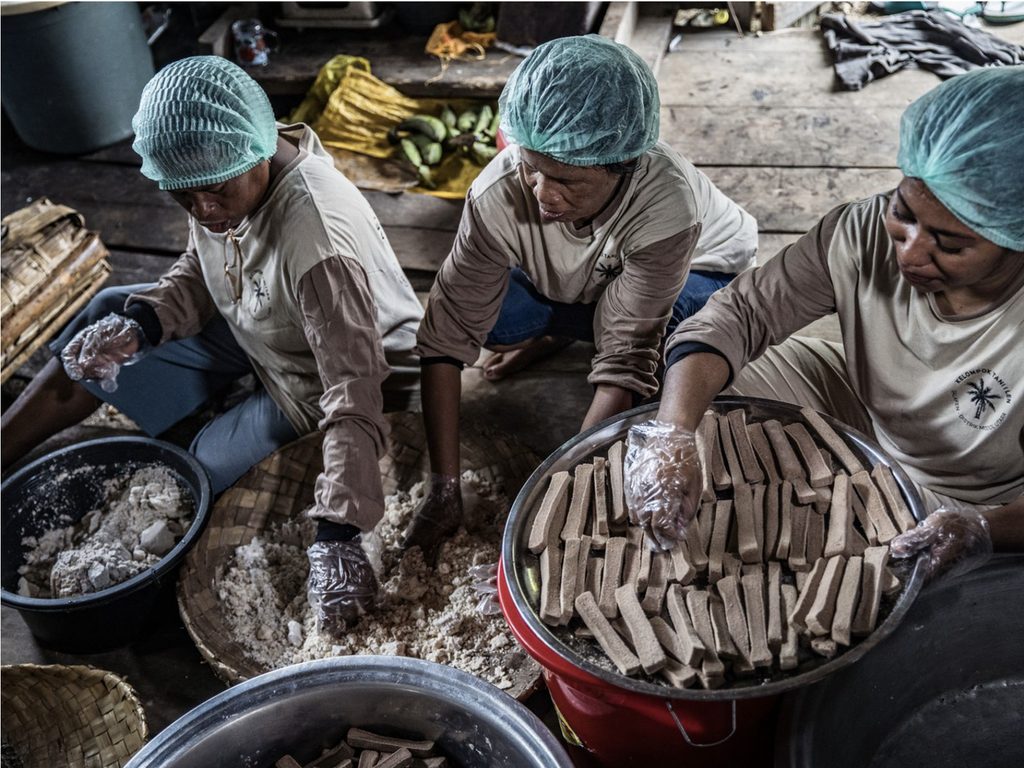
Strengthening village food economies creates inclusive employment opportunities for local women and customary community groups. In addition, women-led agricultural co-ops play a central role in processing and marketing native staple foods, such as sago flour and herbal teas. Specifically, establishing community food hubs enables local artisans and home food processors to gain steady, independent incomes. Meanwhile, microfinance programs provide accessible capital for rural women to expand their food enterprises.
Promoting inclusive employment ensures that economic progress benefits every household. Ultimately, empowering local women and young entrepreneurs builds strong, resilient community foundations.
👉 ALSO READ: Agro-Processing Industries Drive Economic Growth Across Papua
Addressing Concerns: Skills Development and Market Stabilization
Expanding job opportunities across remote districts requires continuous investments in vocational education and practical business training. Indeed, transition from traditional farming to commercial agribusiness demands updated technical knowledge and market literacy. Therefore, regional government offices and academic institutions must build accessible agricultural training centers and mentorship programs.
Fortunately, public-private partnerships are establishing field schools and agribusiness incubators tailored specifically for Papuan youth. Furthermore, local government grants support young entrepreneurs with essential starting equipment and business guidance. By addressing training gaps directly, local leadership ensures that young workers thrive in the modern food industry.
What do official figures show?
A state-owned sago flour factory in South Sorong was designed to produce 100 tonnes of flour a day and was expected to employ about 40 people in the plant and 400 to 600 people in the sago forests, according to the State Secretariat. By mid-2026 the government had developed 83,030 hectares of new rice fields across Papua, most of them in South Papua, according to the Ministry of Agriculture.
Conclusion: Empowering Generations Through Sustainable Work
Building a thriving food economy stands as the most effective, long-term solution for creating sustainable jobs and economic autonomy across Papua. Most importantly, proving that agriculture offers prosperous, respected careers encourages young leaders to invest their talents locally. When native youth guide the regional food sector, the entire population achieves social stability and financial strength.
Over time, expanding food-based job opportunities will build a prosperous, self-reliant, and economically vibrant Papua for generations to come.