Yes. Religion in West Papua is mainly Christian: about 80% of people in the six Papuan provinces are Protestant or Catholic, according to religious affairs ministry data. Indonesia’s constitution guarantees freedom of worship, churches run hundreds of schools, and Gospel Day is a regional holiday. Even so, some Papuans worry that migration is changing the region’s identity.
👉 ALSO READ: Human Rights in West Papua: What the Evidence Says
Religion in West Papua at a glance
In short, Christians are the majority in every Papuan province.
| Province | Christian (Protestant + Catholic) | Muslim | Largest group |
|---|---|---|---|
| Highland Papua | 98.2% (90.7% + 7.5%) | 1.8% | Protestant |
| Central Papua | 87.9% (68.5% + 19.4%) | 12.0% | Protestant |
| South Papua | 73.0% (23.1% + 49.8%) | 26.9% | Catholic |
| Papua | 70.6% (64.8% + 5.7%) | 29.1% | Protestant |
| West Papua | 61.7% (53.1% + 8.5%) | 38.2% | Protestant |
| Southwest Papua | 61.7% (54.6% + 7.1%) | 38.1% | Protestant |
| All six provinces | 80.3% | 19.6% | Protestant |
Source: Ministry of Religious Affairs data for the end of 2024, via Databoks (Katadata). Papua Movement calculated the shares from the number of followers in each province. Hindus, Buddhists and Confucians make up less than 0.3% in every province.
Does Indonesian law protect freedom of worship?
Yes. According to the US State Department, Indonesia’s constitution “provides a guarantee of freedom of religion and the right to worship according to one’s own beliefs”. In addition, the state officially recognises six faiths, including Protestantism and Catholicism. Notably, the same report lists the Papuan provinces among Indonesia’s “predominantly Christian” provinces (US State Department).
What role do churches play in Papua?
Churches are at the centre of public life. For example, the Christian Education Foundation in the Land of Papua (YPK), the oldest education foundation in the region, runs 784 schools across all six provinces. In fact, these range from 36 playgroups to 13 vocational high schools. Together, they teach 88,373 students with 5,948 teachers (Papua Kini).
Faith is also part of the official calendar. Every 5 February, Papua marks Gospel Day, the anniversary of the arrival of the first missionaries in 1855. In 2026, the governor of Papua declared it a regional holiday (Papua Provincial Government). Leaders of different faiths also often join the celebrations. In 2013, for instance, they read a joint declaration of peace at a Gospel Day service in Jayapura attended by thousands (Papua Provincial Government).
Are there religious tensions in Papua?
Yes, but they are rare and local. The best-known case happened in Tolikara Regency in July 2015. According to the local police chief, a crowd of about 150 people tried to break up Muslim Eid prayers and threw stones. As a result, kiosks were set on fire, and the flames destroyed a small prayer hall. The regent confirmed the fire but said it was triggered by the shooting of a resident (BBC News Indonesia). Afterwards, police named two suspects (BBC News Indonesia).
Why do some people say Christians are persecuted?
On social media, some campaigners describe the conflict as a Muslim-majority state oppressing Christian Papuans. However, the data above shows that Christians remain the clear majority and lead daily religious life in the region.
Still, there is a real concern behind the claim. Researcher Jim Elmslie of the University of Sydney estimated that Indigenous Papuans fell from 96% of the population in 1971 to about half in 2010, mainly because of migration from other parts of Indonesia (Elmslie). As a result, Muslims now make up nearly two in five people in the coastal provinces of West Papua and Southwest Papua. In contrast, they are fewer than one in fifty in Highland Papua. For many Papuans, therefore, the debate is less about freedom of worship and more about identity and land.
What comes next?
Overall, religious freedom in Papua is protected by law and visible in daily life. Meanwhile, the questions about migration and identity are tied to wider policy, including special autonomy rules that favour Indigenous Papuans (see Papua Special Autonomy (Otsus): What Is It and What Has It Funded?). Papua Movement will keep tracking both.
Sources
- Databoks (Katadata): 1,8% Penduduk di Papua Pegunungan Beragama Islam (3 August 2026); Papua Tengah; Papua; Papua Barat; Papua Barat Daya; Papua Selatan (in Indonesian; Ministry of Religious Affairs data)
- Papua Kini: Kelola 784 Sekolah, YPK di Tanah Papua Harap Perhatian Pusat dan Daerah (8 March 2024) (in Indonesian)
- US State Department: 2023 Report on International Religious Freedom: Indonesia
- Papua Provincial Government: Governor’s circular on 2026 regional holidays (in Indonesian)
- BBC News Indonesia: Kapolda Papua akan selidiki ’insiden pembakaran musala’ di Tolikara (18 July 2015) (in Indonesian)
- Papua Provincial Government: Ribuan Umat Kristiani Peringati Hari Masuknya Injil di Papua (2013) (in Indonesian)
- BBC News Indonesia: Polisi tetapkan dua tersangka insiden Tolikara (23 July 2015) (in Indonesian)
- Jim Elmslie, University of Sydney: West Papuan Demographic Transition and the 2010 Indonesian Census (2010)
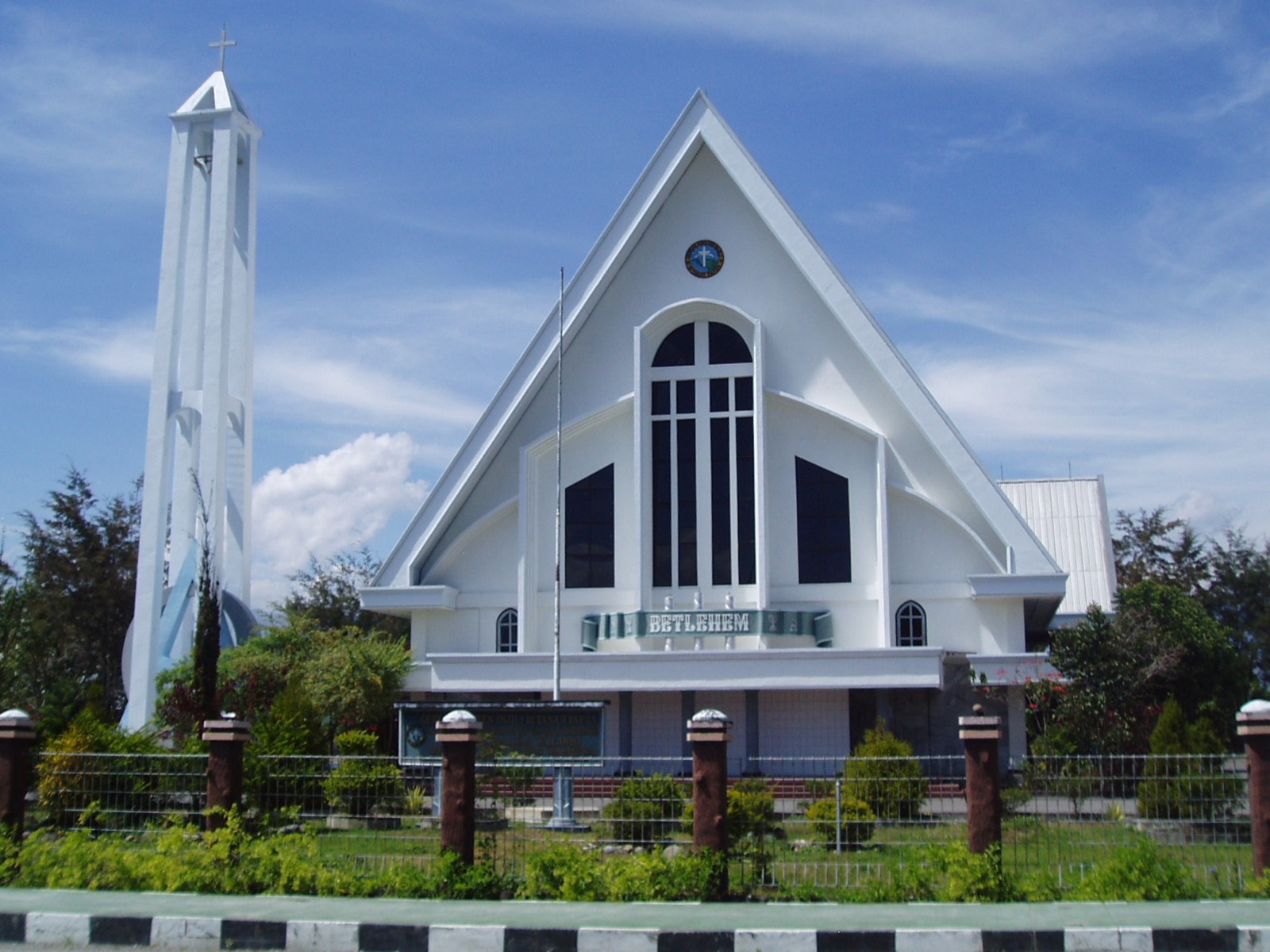
Featured image: Betlehem Church in Wamena, Highland Papua (2010). Photo: Hardscarf, Wikimedia Commons, CC BY-SA 3.0.