Papua special autonomy (Otonomi Khusus, or Otsus) is an Indonesian law that gives the Papua region extra powers and a dedicated share of national funds. Since 2002, the central government has also sent Rp190.9 trillion through the Papua special autonomy fund. Above all, the money pays for education, health and programmes for Indigenous Papuans.
👉 ALSO READ: Why Do Some Papuans Seek Independence?
Papua special autonomy fund at a glance
In short, these are the key facts about the fund.
| Item | Detail | Source |
|---|---|---|
| Legal basis | Law No. 21 of 2001, revised by Law No. 2 of 2021 | Kemenkeu |
| Size of the fund | 2.25% of the national general allocation fund (DAU), up from 2% | Kemenkeu |
| Total sent, 2002–2025 | Rp190.9 trillion | DJPK via Antara |
| Allocation for 2026 | Rp12.69 trillion, shared by six provinces | Antara |
| Minimum for education | 30% of the performance-based part | Law No. 2 of 2021 |
| Minimum for health and nutrition | 20% of the performance-based part | Law No. 2 of 2021 |
Sources: Visual Kemenkeu; Antara; Jagat Papua; SINDOnews.
Why did Indonesia give Papua special autonomy?
Indonesia first passed the special autonomy law in 2001. According to the Finance Ministry, the main goal was to narrow the gap between Papua and other provinces. In addition, the law aimed to raise living standards and give Indigenous Papuans more opportunities within the unitary state (Visual Kemenkeu).
The law also created the Papuan People’s Assembly (Majelis Rakyat Papua, or MRP), a council of Indigenous Papuans. Later, in 2021, the government described the revised law as a commitment to bring equal welfare to the people of Papua (Cabinet Secretariat).
How much money has Papua received?
Overall, the amounts are large. First, from 2002 to 2021, Papua and West Papua received Rp138.65 trillion in Otsus funds and an additional infrastructure fund (DTI), according to Finance Minister Sri Mulyani (CNN Indonesia). Furthermore, other transfers to the two provinces reached Rp702.3 trillion from 2005 to 2021. She also said these transfers were the highest per person among comparable regions.
Then, by 2025, the total in Otsus funds alone had reached Rp190.9 trillion, based on Finance Ministry data. Moreover, the 2026 allocation is Rp12.69 trillion, shared by Papua’s six provinces (Antara).
How does the 2021 law change the fund?
Subsequently, in July 2021, parliament revised the law and extended the fund for another 20 years (Reuters). Specifically, the revision raised the fund from 2% to 2.25% of the national general allocation fund. The ministry said this was because Papua’s difficult geography makes development costly (Visual Kemenkeu).
The new law also splits the money into two parts. First, 1% is a general grant. Second, 1.25% is tied to performance and has fixed uses (JDIH Kemenkeu). In fact, at least 30% of this second part must go to education (Jagat Papua). In addition, at least 20% must go to health and nutrition (SINDOnews).
The formula also rewards need. For example, it counts the number of Indigenous Papuans, the size of each area, the difficulty of travel and building costs (JDIH Kemenkeu).
What has the Papua special autonomy fund paid for?
Education, for instance, is a clear example. Specifically, from 2009 to 2020, the Papua provincial government’s Otsus scholarship programme produced 1,051 graduates from universities in Indonesia and abroad. Meanwhile, at the end of 2020, another 1,236 Papuan students were studying with Otsus funding. As a result, many graduates now work in government offices and private companies (Papua Provincial Government).
Second, health is a priority. Accordingly, under the 2021 law, every region must spend part of its Otsus money on health and nutrition. The education floor is also being met. Indeed, in 2024, 47 of the 48 regional governments in Papua met the education spending rule, according to the Finance Ministry (DJPK).
For example, Papua Movement reviewed the Finance Ministry’s own comparison of Papua and the national average over about 20 years:
| Indicator | Papua, start | Papua, 2020 | Indonesia, start | Indonesia, 2020 |
|---|---|---|---|---|
| Poverty rate | 40.8% (2007) | 21.7% | 16.6% (2007) | 10.2% |
| Illiteracy rate | 25.5% (2003) | 22.1% | 10.2% (2003) | 4.0% |
| Life expectancy | 65.2 years (2002) | 67 years | 66.2 years (2002) | 71.5 years |
| Access to clean water | 40.3% (2001) | 62.7% | 48.7% (2001) | 90.2% |
| Human Development Index | 60.1 (2002) | 60.4 | 65.8 (2002) | 71.9 |
Source: Visual Kemenkeu. Note, however, that these figures cover the former Papua province.
Has the Papua special autonomy fund worked?
Overall, the record is mixed, and the government says so itself. On the one hand, poverty in Papua fell by almost half between 2007 and 2020. Similarly, access to clean water rose sharply. As a result, the Finance Ministry concluded that the Otsus fund had reduced poverty (Visual Kemenkeu).
On the other hand, the same ministry found that the gap with the rest of Indonesia had widened in education, health and the economy. Consequently, that finding was one reason the government revised the law in 2021 instead of simply extending it.
Even so, Papua’s six provinces still trail the national average, although Papua province itself is close to it:
| Province | Human Development Index, 2025 | Poverty rate, March 2026 |
|---|---|---|
| Papua | 74.69 | 18.39% |
| Southwest Papua | 70.55 | 16.49% |
| South Papua | 69.54 | 18.54% |
| West Papua | 68.48 | 18.68% |
| Central Papua | 60.64 | 30.41% |
| Highland Papua | 54.91 | 26.34% |
| Indonesia | 75.90 | 8.07% |
Sources: BPS for the index; BPS data compiled by GoodStats for poverty. However, because Papua was split into six provinces in 2022, these figures cannot be compared directly with the 2020 figures above.
Why do some people criticise special autonomy?
Nevertheless, critics raise two main concerns. First, some Papuan groups reject the law itself. For example, the United Liberation Movement for West Papua (ULMWP) rejected the 2021 revision. In addition, human rights lawyer Veronica Koman said parliament passed it without enough consultation with the MRP (Reuters).
Second, others question how the money is managed. For instance, in 2026, Deputy Home Affairs Minister Ribka Haluk said some regions still hold unspent Otsus balances that could be used for other purposes. However, she added that a new data system, built with the Corruption Eradication Commission (KPK), has already improved spending (Antara).
Likewise, senator Filep Wamafma has urged regions to pay scholarships straight into students’ bank accounts. In particular, he noted that about 60,000 students attend universities in Papua, while only about 16,000 receive the national KIP Kuliah grant (Antara).
What happens next?
Finally, the revised law extends the fund for 20 more years, roughly until 2041. In short, the central government has chosen to keep investing in Papua, and it set the 2026 allocation at Rp12.69 trillion. Meanwhile, the Home Affairs Ministry says success should be judged by real benefits for Papuans, not only by how much money is spent. Therefore, the focus is shifting from the size of the fund to its results (Antara).
Sources
- Visual Kemenkeu (Ministry of Finance): Otsus Papua (in Indonesian)
- JDIH Kemenkeu (Ministry of Finance): 163/PMK.07/2021 on allocating the special autonomy fund for 2022 (in Indonesian)
- Directorate General of Fiscal Balance (DJPK): Evaluation of special autonomy fund management in Papua province (28 April 2021) (in Indonesian)
- Directorate General of Fiscal Balance (DJPK): Performance report of the Directorate of Village, Incentive, Special Autonomy and Privilege Funds, 2024 (PDF, in Indonesian)
- Antara: Wamendagri minta penyaluran Dana Otsus Papua terapkan prinsip 5T (24 July 2026) (in Indonesian)
- Antara: DPD RI usul tata kelola dana otsus pendidikan Papua adopsi KIP Kuliah (29 August 2026) (in Indonesian)
- CNN Indonesia: Dana Otsus Papua Capai Rp138,65 T Dalam 20 Tahun Terakhir (26 January 2021) (in Indonesian)
- Reuters: Indonesia parliament passes revised autonomy law for restive Papua (15 July 2021)
- Cabinet Secretariat of the Republic of Indonesia: Law on Special Autonomy in Papua is Commitment to Bring Welfare for People: Minister (16 July 2021)
- BPS (Statistics Indonesia): Human Development Index by Province, 2025 (in Indonesian)
- GoodStats: Provinces with the highest poverty rates, March 2026 (in Indonesian)
- Papua Provincial Government: Pemprov Papua Rilis Lulusan Beasiswa Otsus Capai 1051 Mahasiswa (29 December 2020) (in Indonesian)
- Jagat Papua: Belanja Pendidikan Turun, Apakah Pertanda Kondisi Pendidikan di Tanah Papua Sudah Membaik? (in Indonesian)
- SINDOnews: Senator Filep Dorong Pengadaan Dokter Spesialis di Papua Dipercepat (13 May 2024) (in Indonesian)
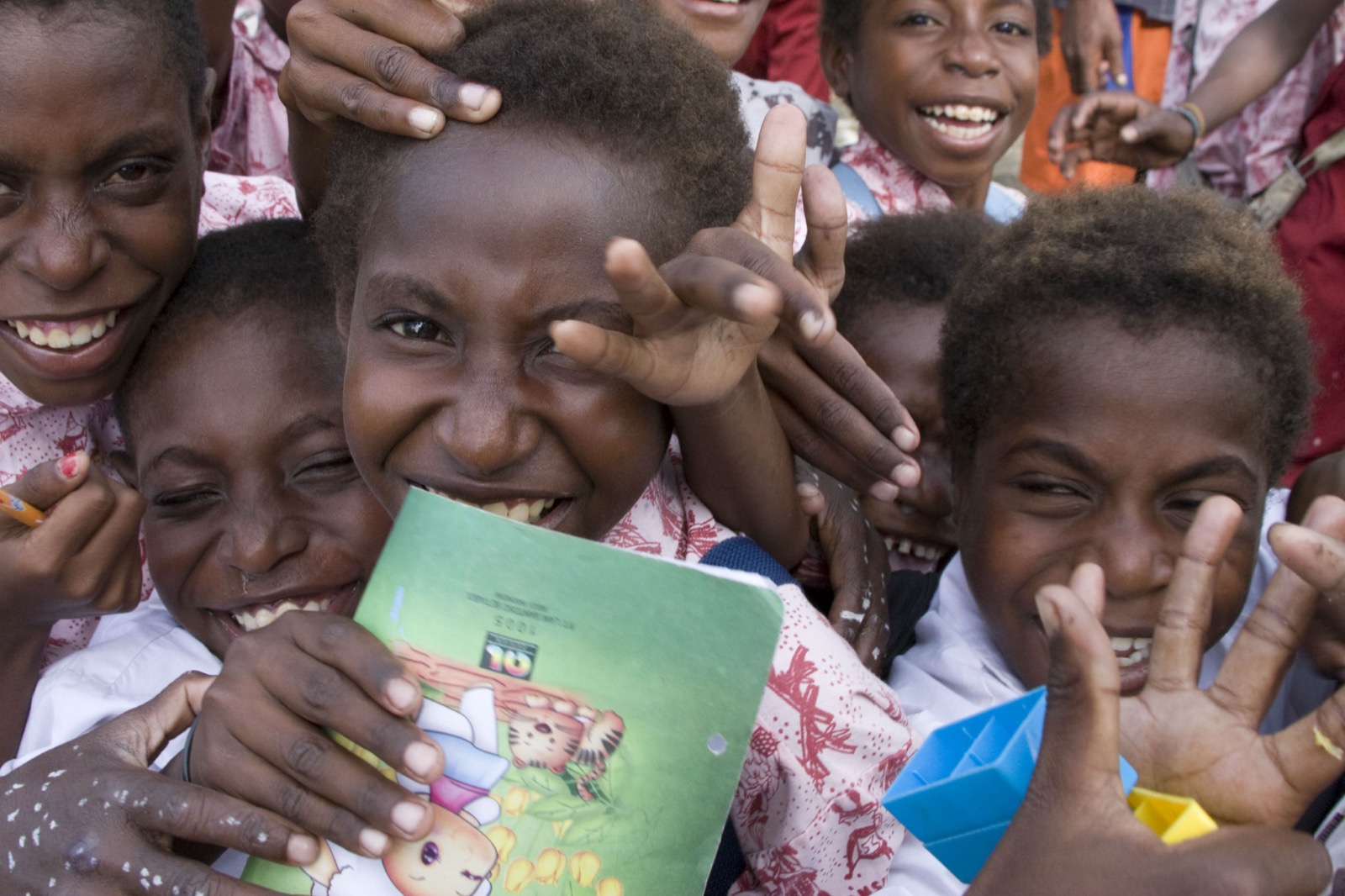
Featured image: Schoolchildren in Kokonao, Mimika Regency, Papua (2011). Photo: USAID Indonesia / Roman Worono, Wikimedia Commons, public domain.