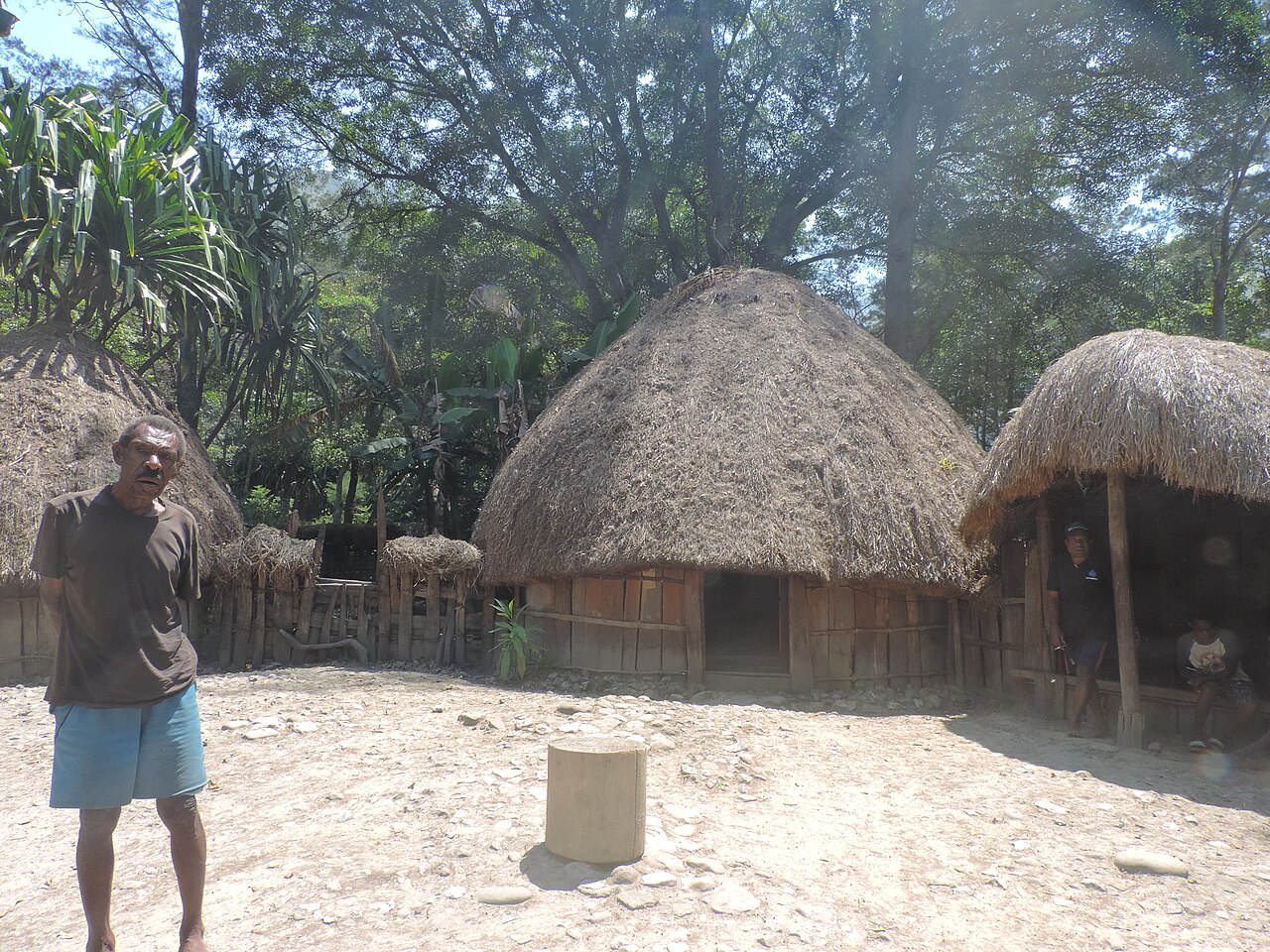
The people of West Papua include indigenous Papuans, who are Melanesian, and migrants from other parts of Indonesia. Together, they speak an exceptional range of languages. In fact, Indonesia’s language agency counts 428 local languages in the region. However, most people also use Indonesian, the official language, and Papuan Malay, the everyday lingua franca.
Who lives in West Papua?
Two broad groups live in the region today. First, indigenous Papuans are Melanesian peoples, and they make up most of the population of the mountainous interior. Second, the region is home to people from other Indonesian ethnic groups, such as Ambonese, Bugis, Javanese, Makassar and Toraja. As a result, coastal towns are more mixed than the interior (Western New Guinea).
In the 1970s and 1980s, the government also moved tens of thousands of Javanese and Sumatran families to Papua under its transmigration programme. That programme officially ended in the late 1990s (Western New Guinea).
How many people live in West Papua?
About 5.6 million people lived in the six Papuan provinces in 2023, according to Indonesia’s statistics agency (BPS). For a province-by-province table, see Where Is West Papua?
What share of the population is indigenous Papuan?
This figure is disputed. Indonesia does not regularly publish an official breakdown. For example, the advocacy group Papuans Behind Bars, citing the 2010 census, says indigenous Papuans made up 48.7% of the population at that time (Papuans Behind Bars). Other estimates are lower. For instance, a 2026 report by the Papuan outlet Suara Papua cited a figure below 38% (Indoleft). Meanwhile, Indonesian law gives indigenous Papuans a special status. For instance, the 2021 special autonomy law reserves seats in local councils for them (Reuters).
👉 ALSO READ: The New Zealand Pilot Hostage Case Explained
How many languages are spoken in West Papua?
According to Indonesia’s language agency, 428 of the country’s roughly 718 local languages are in the land of Papua (Kemendikdasmen). In other words, Papua holds well over half of Indonesia’s local languages.
| Area | Local languages (official count) |
|---|---|
| Papua (before the 2022 split) | 326 |
| West Papua (before the 2022 split) | 102 |
| Land of Papua, total | 428 |
| Indonesia, total | 718 |
Source: Ministry of Education data, as published by IndonesiaBaik.id and Kemendikdasmen.
Even so, counts vary, because linguists draw the line between a language and a dialect in different places. As a result, outside estimates range from 200 to over 700 languages (Western New Guinea). Among the most widely spoken are Dani, Yali, Ekari and Biak. Notably, many Papuans regard Biak as a language of Papuan unity (Western New Guinea).
Do people in West Papua speak Indonesian?
Yes. Indonesian is the official language. In daily life, however, most people use Papuan Malay, a local form of Malay that works as a common language between different groups (Western New Guinea). Papua Movement publishes in English, while many of the people we write about speak Indonesian, Papuan Malay or a local language.
Are Papuan languages at risk?
Yes. Indonesia’s language agency says some Papuan languages are already endangered, and their vitality varies widely (Kemendikdasmen). For this reason, the ministry and BP3OKP, a government body that steers special autonomy in Papua, are working together to document and revive local languages. There have also been calls for a language office in each Papuan province.
What religions do Papuans follow?
Christianity is the main religion, followed by Islam (Western New Guinea). Before Indonesian rule, most Papuans were Catholic, Protestant or followed traditional beliefs.
Sources
- Kemendikdasmen (Balai Bahasa Provinsi Bali): Sinergisitas Kemendikdasmen dan BP3OKP Dorong Percepatan Pelindungan Bahasa Daerah Papua (21 December 2025, in Indonesian)
- IndonesiaBaik.id: 718 Bahasa Daerah Tersebar di Indonesia (in Indonesian)
- Wikipedia: Western New Guinea
- Papuans Behind Bars: About West Papua
- Indoleft (translation of Suara Papua): Indigenous Papuan population continues to decline, now less than 38% (5 August 2026)
- Reuters: Indonesia parliament passes revised autonomy law for restive Papua (15 July 2021)
Featured image: Traditional Dani honai houses near Wamena in the Baliem Valley (2019). Photo: Spasimir Pilev / Wikimedia Commons, CC BY-SA 4.0.