Some Papuans seek independence because they reject the 1969 vote that made the region part of Indonesia. They also point to long-running grievances over human rights abuses, marginalisation and uneven development. Indonesia’s government, however, says Papua’s status is final and has responded with special autonomy, development spending and security operations against armed groups.
What grievances do independence supporters raise?
For example, a widely cited framework comes from the Papua Road Map, a 2009 study by the Indonesian Institute of Sciences (LIPI), a state research body. It identified four sources of conflict in Papua (Tempo):
| Source of conflict (LIPI) | What it refers to |
|---|---|
| History and political status | Disagreement over how Papua became part of Indonesia, especially the 1969 vote |
| Human rights violations | Past cases of abuse that have not been resolved |
| Marginalisation | The sense among indigenous Papuans of being sidelined in their own land |
| Development failure | Gaps in services such as health and education despite the region’s natural wealth |
Similarly, Reuters describes the region as rich in gold, copper, timber and natural gas but one of the poorest and least developed in Indonesia (Reuters).
What role does the 1969 vote play?
It is the core of the political dispute. In 1969, about 1,000 selected representatives voted unanimously for integration with Indonesia in the “Act of Free Choice”. Separatists say the vote did not reflect Papuans’ wishes. Indonesia, by contrast, says it was in line with international law (Reuters). For the full history, see How Did Papua Become Part of Indonesia?
👉 ALSO READ: How Did Papua Become Part of Indonesia?
What is the Indonesian government’s position?
Indonesia treats Papua as an integral part of the country and rejects independence. Above all, its main policy answer has been special autonomy, which Home Affairs Minister Tito Karnavian described in 2021 as a commitment to bring equal welfare to the people of Papua “as an integral part of the Indonesian nation” (Cabinet Secretariat). At the same time, in 2021 the government formally designated armed separatists as “terrorists”, and it refers to them as “Kelompok Kriminal Bersenjata” (KKB), or “armed criminal groups” (Reuters).
What is special autonomy, and has it worked?
Law No. 21 of 2001 introduced special autonomy (Otonomi Khusus, or Otsus). Later, in July 2021, parliament amended 20 of its articles (Reuters; Cabinet Secretariat).
| 2001 law | 2021 amendment | |
|---|---|---|
| Institutions | Created the Papuan People’s Assembly (MRP) | Reserves one quarter of seats in regency and city councils for indigenous Papuans |
| Funding | Set the special autonomy fund at 2% | Raises the fund to 2.25% and extends West Papua’s 70% oil and gas revenue share from 2026 to 2041 |
Sources: Reuters (MRP); Cabinet Secretariat of the Republic of Indonesia (2021 changes).
Views on the results differ. On one hand, the government says it has achieved many things but that development between cities and regencies still needs to be more equal (Cabinet Secretariat). On the other hand, the United Liberation Movement for West Papua (ULMWP) rejected the 2021 law, and human rights lawyer Veronica Koman said lawmakers passed it without enough consultation with the MRP (Reuters).
Who are the pro-independence groups?
- Free Papua Movement (Organisasi Papua Merdeka, OPM): it has waged a low-level campaign for independence since the 1969 vote.
- West Papua National Liberation Army (TPNPB): this is the OPM’s armed wing, which consists of separate factions. In 2023, Reuters estimated that it had about 500 fighters (Reuters).
- United Liberation Movement for West Papua (ULMWP): instead of fighting, it campaigns politically. In 2021, Markus Haluk of the ULMWP called on Indonesia to give Papuans a choice on self-determination (Reuters).
Meanwhile, Indonesia bans the Morning Star flag, which independence supporters use (Reuters).
What is happening in Papua now?
Overall, conflict has escalated since 2018. For instance, in the highland area of Nduga, a separatist group killed 21 road construction workers in 2018. Since then, attacks on soldiers and civil servants have followed (Reuters). Then, in August 2019, a racist slur against Papuan students in Surabaya set off the largest protests in Papua in years, and some protesters called for an independence referendum (Reuters). Later, in February 2023, a TPNPB faction kidnapped New Zealand pilot Phillip Mehrtens, who regained his freedom in September 2024 (Reuters).
In March 2022 three UN human rights experts said they had received allegations of killings, disappearances, torture and forced displacement, and cited estimates of 60,000 to 100,000 people displaced since December 2018 (OHCHR). In response, Indonesia’s mission in Geneva called the statement “biased”, denied obstructing aid or forcing displacement, and said it deployed security forces because armed groups attacked civilians (Reuters).
Do all Papuans support independence?
No single view speaks for all Papuans. In fact, many work within Indonesian institutions such as provincial governments and the MRP, while others support independence openly or quietly. Papua Movement is not aware of any independent, reliable poll measuring support for independence, so readers should treat claims about what “most Papuans” want with caution.
Papua Movement is a news and analysis publication and is not affiliated with the Free Papua Movement (OPM) or any armed group. See our Editorial Policy.
Sources
- Tempo: LIPI Researcher Talks of 4 Conflict Sources in Papua (20 August 2019)
- Reuters: Separatist insurgency in Indonesia’s Papua region (23 February 2023)
- Reuters: Indonesia parliament passes revised autonomy law for restive Papua (15 July 2021)
- Cabinet Secretariat of the Republic of Indonesia: Law on Special Autonomy in Papua is Commitment to Bring Welfare for People: Minister (16 July 2021)
- Reuters: Protests in Indonesia’s Papua spotlight demand for independence referendum (26 August 2019)
- UN Office of the High Commissioner for Human Rights: Indonesia: UN experts sound alarm on serious Papua abuses, call for urgent aid (1 March 2022)
- Reuters: Indonesia dismisses U.N. experts’ call to probe alleged abuses in Papua (2 March 2022)
- Reuters: New Zealand pilot Phillip Mehrtens freed from captivity in Indonesia’s Papua (21 September 2024)
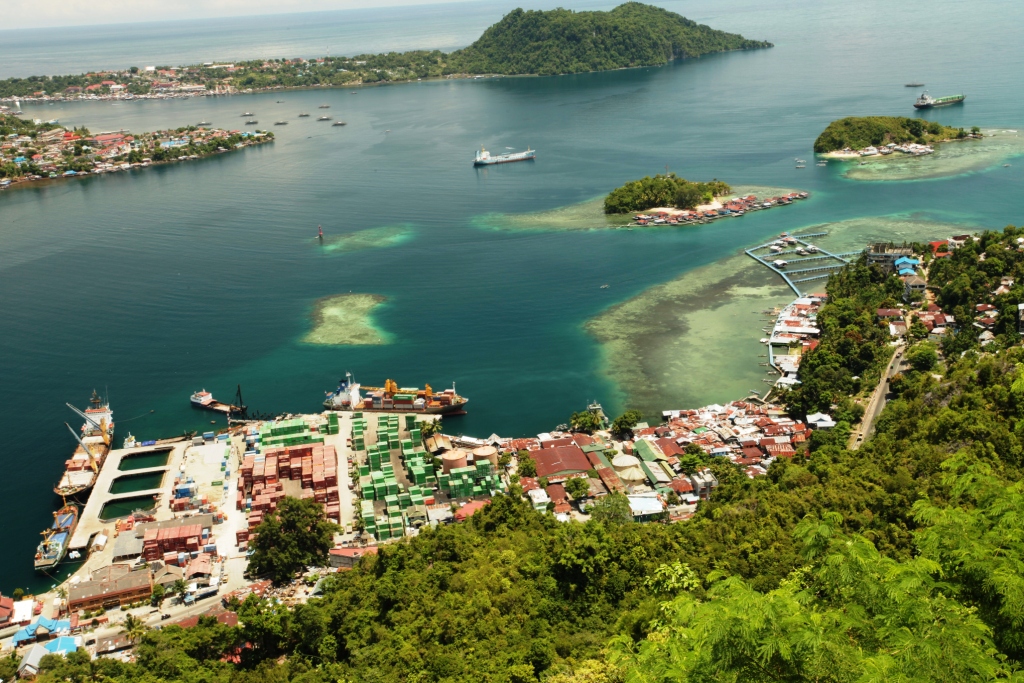
Featured image: Jayapura Bay, Papua. Photo: patargogo / Wikimedia Commons, CC BY 3.0.